Knowledge base · Additives
Food additives explained
A food additive is any substance added to food to affect its colour, flavour, texture, or shelf life. This is NakedCalorie's reference to the additives that dominate industrial food — sweeteners, colours, preservatives, emulsifiers — with regulatory status, evidence, and how each one lands in the food-quality score.
What is a food additive?
A food additive is any substance whose intended use results in it becoming a component of, or otherwise affecting the characteristics of, food. The US Food, Drug, and Cosmetic Act codifies the definition in section 201(s); the EU uses a functionally identical wording in Regulation (EC) No 1333/2008 Article 3.
The definition captures three intents: to affect the food's chemical, physical, or organoleptic properties (colour, flavour, texture); to preserve the food (antioxidants, antimicrobials); or to enable its production (processing aids, anti-caking agents, release agents). It excludes pesticides, veterinary drug residues, and food-contact materials — those are regulated under separate frameworks.
Additives are not ingredients in the culinary sense. Their function is technological, not nutritional. Salt cures ham because sodium chloride draws water out of muscle cells; sodium nitrite is added to the same ham because it inhibits Clostridium botulinum and fixes the red colour. Both end up on the label. Only one is a NOVA marker for ultra-processing.
What are the FDA functional categories?
The FDA's 21 CFR 170.3(o) lists 32 functional categories that any food additive can fall into. Roughly 4,000 substances are currently in the FDA's food-additive and GRAS databases; a further estimated 1,000 substances are used under manufacturer self-affirmed GRAS that has never been notified to the agency.
The categories most commonly seen on a supermarket label:
- Anticaking agents — silicon dioxide, calcium silicate, magnesium stearate
- Antimicrobials — sodium benzoate, potassium sorbate, sodium nitrite, calcium propionate
- Antioxidants — BHA, BHT, tocopherols, ascorbic acid, rosemary extract
- Colours — synthetic (Red 40, Yellow 5, Blue 1) and natural (caramel, annatto, beet juice)
- Emulsifiers — lecithins, mono- and diglycerides, polysorbates, DATEM
- Flavour enhancers — monosodium glutamate, disodium inosinate, disodium guanylate
- Flavouring agents — natural and artificial flavours (thousands of compounds)
- Humectants — glycerol, propylene glycol, sorbitol
- Non-nutritive sweeteners — aspartame, sucralose, saccharin, acesulfame-K, stevia, monk fruit
- Nutritive sweeteners — sucrose, HFCS, corn syrup, dextrose, maltitol
- pH control agents — citric acid, phosphoric acid, sodium citrate, sodium bicarbonate
- Stabilisers and thickeners — carrageenan, xanthan gum, guar gum, pectin, gelatin
How does the E-number system work?
An E-number is a three- or four-digit code assigned by the European Commission to every food additive approved for use in the European Union. Numbers are grouped by function: E100 series are colours, E200 antimicrobials, E300 antioxidants, E400 thickeners and emulsifiers, E500 pH regulators, E600 flavour enhancers, E700 antibiotics, E900 miscellaneous, E1000+ newer additions.
Two rules make the system easy to read.
- The E stands for Europe, not for any quality judgement. E300 is ascorbic acid (vitamin C); E621 is monosodium glutamate; E952 is cyclamate. Same prefix, very different additives.
- Every EU-approved additive has one. If a substance appears on an EU label without an E-number, it is either a whole ingredient or a flavouring (flavours are regulated separately under Regulation (EC) No 1334/2008).
| E-number range | Function | Examples |
|---|---|---|
| E100–E199 | Colours | E100 curcumin, E120 cochineal, E129 Allura Red (Red 40), E150 caramel |
| E200–E299 | Preservatives | E200 sorbic acid, E211 sodium benzoate, E250 sodium nitrite |
| E300–E399 | Antioxidants & acidity regulators | E300 ascorbic acid, E306 tocopherols, E330 citric acid, E320 BHA |
| E400–E499 | Thickeners, stabilisers, emulsifiers | E407 carrageenan, E412 guar gum, E415 xanthan gum, E471 mono/diglycerides |
| E500–E599 | pH regulators, anti-caking | E500 sodium bicarbonate, E551 silicon dioxide |
| E600–E699 | Flavour enhancers | E621 monosodium glutamate, E627 disodium guanylate |
| E900–E1521 | Glazing agents, sweeteners, gases, others | E951 aspartame, E955 sucralose, E960 steviol glycosides, E965 maltitol |
Non-sugar sweeteners — what the label lists and what the evidence says
Six non-sugar sweeteners dominate US and EU supermarket shelves: aspartame, sucralose, saccharin, acesulfame-K, stevia extracts (steviol glycosides), and monk fruit extract (mogrosides). Their sweetness ratios range from 200× (aspartame, saccharin) to 20,000× (stevia extracts) that of sucrose, meaning milligram doses replace gram-scale sugar.
| Sweetener | Sweetness (× sucrose) | ADI (mg/kg body weight) | US status | EU status |
|---|---|---|---|---|
| Aspartame (E951) | ~200 | 40 (EFSA) / 50 (FDA) | Approved 1981 | Approved; re-evaluated 2013 |
| Sucralose (E955) | ~600 | 15 (EFSA) / 5 (FDA) | Approved 1998 | Approved 2004 |
| Saccharin (E954) | ~300 | 5 | Approved (warning removed 2000) | Approved |
| Acesulfame-K (E950) | ~200 | 9 (EFSA) / 15 (FDA) | Approved 1988 | Approved |
| Steviol glycosides (E960) | ~200–350 | 4 | GRAS from 2008 | Approved 2011 |
| Monk fruit extract | ~150–200 | Not specified | GRAS from 2010 | Not approved |
The 2023 WHO guideline on non-sugar sweeteners, based on a systematic review of 283 studies (Rios-Leyvraz & Montez), concluded that non-sugar sweeteners should not be used for weight control and that long-term use may increase the risk of type 2 diabetes and cardiovascular disease in adults. The IARC classified aspartame as "possibly carcinogenic to humans" (Group 2B) in July 2023 while JECFA reaffirmed the existing ADI. Suez et al. (2022, Cell) reported distinct glycemic responses to saccharin and sucralose in 120 healthy adults, mediated by gut microbiota changes visible after two weeks. The individual sweetener pages carry the full study lists.
Colours — synthetic dyes and the 2025 US landscape
Nine synthetic colours are certified by the FDA for food use as of 2026: FD&C Red No. 40, Yellow No. 5, Yellow No. 6, Blue No. 1, Blue No. 2, Green No. 3, Orange B, and Citrus Red No. 2. FD&C Red No. 3 was revoked in January 2025 with reformulation deadlines running to January 2027.
The colours are certified batch-by-batch by the FDA under 21 CFR 74. All except Orange B and Citrus Red No. 2 (which have narrow permitted uses) appear routinely on candy, sweetened beverages, breakfast cereals, and boxed macaroni. The most common concern in the peer-reviewed literature is a possible link between synthetic food colours and hyperactivity in susceptible children — the 2007 "Southampton study" (McCann et al., The Lancet) reported an effect from a mixture of six colours plus sodium benzoate, which led the EU to require a warning label ("may have an adverse effect on activity and attention in children") on foods containing them.
California's Food Safety Act of 2023 banned Red 3, potassium bromate, brominated vegetable oil, and propylparaben from foods sold in the state starting in 2027. A companion 2024 bill banned six synthetic colours from foods served in California public schools starting in 2028. See Red 40 for the entry-level reference.
Preservatives — antimicrobials and antioxidants
Preservatives split into two functional families: antimicrobials, which inhibit bacterial or fungal growth (sodium benzoate, potassium sorbate, sodium nitrite, calcium propionate), and antioxidants, which prevent oxidative rancidity (BHA, BHT, tocopherols, ascorbic acid, rosemary extract).
Sodium benzoate (E211) is used in acidic foods and drinks — pickles, salad dressings, carbonated soft drinks — because it converts to benzoic acid at low pH, which inhibits mould and yeast. When combined with ascorbic acid and heat or UV light, it can form trace amounts of benzene, a known human carcinogen; the FDA and EFSA have monitored beverage levels since the 1990s. See sodium benzoate.
Sodium nitrite (E250) is used to cure meats — bacon, ham, hot dogs — because it inhibits C. botulinum, fixes the pink colour, and contributes to cured flavour. The IARC classified processed meat as Group 1 (carcinogenic to humans) in 2015 based on colorectal cancer evidence, with N-nitroso compounds formed from nitrite one plausible mechanism. The World Cancer Research Fund recommends limiting processed meat to "very little, if any."
BHA (E320) and BHT (E321) are synthetic phenolic antioxidants used in cereals, chewing gum, and vegetable oils. The IARC classifies BHA as "possibly carcinogenic to humans" (Group 2B) based on rodent stomach-tumour data; the EU restricts both to specific uses and concentrations. Tocopherols (E306–309), ascorbic acid (E300), and rosemary extract (E392) are common natural-source alternatives with cleaner regulatory histories.
Emulsifiers and stabilisers
An emulsifier stabilises a mixture of oil and water; a stabiliser prevents an already-mixed product from separating. Both are hydrocolloids or surfactants that mimic the natural interfacial chemistry of proteins and phospholipids in food.
The workhorses of the industry:
- Lecithins (E322) — extracted from soy, sunflower, or egg. Universal emulsifier for chocolate, margarine, baked goods.
- Mono- and diglycerides of fatty acids (E471) — the single most common emulsifier on the US label. Bread, ice cream, margarine, whipped topping.
- DATEM (E472e) — a dough conditioner in industrial bread.
- Polysorbate 60, 65, 80 (E432, E436) — ice cream, dairy analogues, salad dressings.
- Carrageenan (E407) — chocolate milk, plant milks, deli meats, ice cream.
- Xanthan gum (E415) — gluten-free baking, salad dressings, sauces.
- Guar gum (E412) — dairy, gluten-free baking, sauces.
- Carboxymethylcellulose (E466) — ice cream, gluten-free baking, low-fat dairy.
The 2015 Chassaing et al. paper in Nature reported that low doses of polysorbate-80 and carboxymethylcellulose disrupted the mucus layer of the mouse colon, altered the gut microbiota, and promoted low-grade inflammation and metabolic syndrome. A 2022 follow-up in Gastroenterology extended the polysorbate-80 finding to humans in a small controlled feeding study. The 2023 NutriNet-Santé analysis (Sellem et al., The BMJ) linked total emulsifier intake with a modest increase in cardiovascular disease risk in 95,442 adults followed for a median 7.4 years. The evidence base is still developing but is dense enough that NakedCalorie marks polysorbates, carrageenan, and carboxymethylcellulose as Tier 2.
Which additives are banned in the EU but allowed in the US?
As of 2026 a handful of additives permitted on US shelves are banned or heavily restricted in the EU. The divergence is not arbitrary — it reflects the EU's pre-market approval and mandatory re-evaluation model versus the US's GRAS self-affirmation model.
- Potassium bromate — dough conditioner. Banned in the EU, UK, Canada, Brazil, and China; permitted in the US. California banned it from foods sold in the state starting 2027.
- Azodicarbonamide (ADA) — dough conditioner and bleaching agent. Banned in the EU and Australia; permitted in the US at 45 ppm max in flour.
- Titanium dioxide (E171) — whitening agent. Banned in the EU in 2022 after EFSA concluded it could no longer be considered safe as a food additive; permitted in the US.
- Propylparaben — preservative. Banned in EU foods since 2006; permitted in the US and included in California's 2027 ban.
- Butylated hydroxyanisole (BHA) — antioxidant. Restricted in the EU to specific uses; permitted more broadly in the US.
- rBST/rBGH — recombinant bovine growth hormone in dairy. Banned in the EU, Canada, Japan, Australia, New Zealand; permitted in the US.
Brominated vegetable oil (BVO), long restricted in the EU, was banned by the FDA in July 2024 after decades of use as an emulsifier in citrus sodas. Red 3 followed in January 2025. The direction of travel is clear: the US is slowly closing the gap with the EU, but the reformulation lag runs to 2027–2028 in most cases.
How is an Acceptable Daily Intake set, and what does it not cover?
The ADI is the amount of an additive a person can consume every day for a lifetime without appreciable health risk. It is derived from the highest dose in animal studies that produced no observed adverse effect (the NOAEL), divided by a safety factor of 100 to account for interspecies and interindividual variability.
The math is simple. If chronic feeding studies in rats show no adverse effect up to 4,000 mg/kg/day (the NOAEL for aspartame), dividing by 100 yields an ADI of 40 mg/kg body weight per day (the current EFSA value). A 70 kg adult can consume 2,800 mg of aspartame daily — the equivalent of roughly 14 cans of diet cola — and remain within the ADI.
What the ADI does not cover:
- Synergistic effects between multiple additives consumed together. A typical Group 4 diet delivers dozens of additives simultaneously, none individually above its ADI.
- Microbiome-mediated effects at doses below the toxicological NOAEL. Suez 2022 saw sucralose-induced glucose intolerance at intakes well within the FDA ADI.
- Chronic low-grade inflammation from emulsifier-driven mucus disruption, which the toxicology paradigm was not designed to detect.
- Subpopulation vulnerability — pregnant women, infants, people with rare metabolic conditions like phenylketonuria (aspartame).
None of this makes the ADI wrong. It makes it necessary but not sufficient. NakedCalorie uses ADIs where they exist and marks additives whose evidence has moved beyond the ADI framework.
How does NakedCalorie weight additive load?
The additive-load contribution to the food-quality score has three inputs: total number of distinct additive classes on the label, presence of Tier 2 or Tier 3 additives (see the ingredient encyclopedia for the tier definitions), and any additive banned or under active restriction in the EU or a US state.
- Class count. A product with sweetener + colour + preservative + emulsifier + flavour enhancer scores worse than a product with two of those, even if the total number of ingredients is similar. Diversity of additive function correlates with degree of formulation.
- Tiered flags. Aspartame, sucralose, carrageenan, polysorbates, BHA/BHT, sodium nitrite, and the certified synthetic colours are surfaced individually in the scan with the current evidence summary.
- Regulator-restricted overrides. Potassium bromate, azodicarbonamide, brominated vegetable oil (US, pre-2024 stock), titanium dioxide, and Red 3 (US, pre-2027 stock) each carry an explicit regulator note.
The score is deliberately conservative: it never marks a product unsafe, because "unsafe" is a legal determination the FDA and EFSA make. It marks products as more or less formulated, and it lets users decide where to draw their own line. See What's Inside for the complete methodology.
Browse every additive entry
Red 40 (Allura Red AC, E129)
The most-used red food dye in the US. Where it appears, what the safety reviews say, and how its regulatory status varies across markets.
7 min read
Sodium benzoate
The default acid-food preservative — safe on its own, chemically reactive with vitamin C in the same bottle.
7 min read
BHA and BHT (butylated hydroxyanisole and toluene)
The synthetic antioxidants preserving oils, cereals, and processed meats. Regulatory status, IARC classification, and where they show up.
6 min read
TBHQ (tert-butylhydroquinone)
The synthetic antioxidant behind long-shelf-life fried foods and instant noodles. Where it appears and what regulators say.
5 min read

Potassium sorbate
The most common preservative in yoghurts, cheeses, dried fruit, and wine. Why regulators consider it safe and why NOVA still classes it as Group 4.
5 min read
Sulfites (sulphur dioxide and related compounds)
The most-declared preservative allergen. Where sulfites appear, why they carry a mandatory label warning, and what regulators say.
6 min read
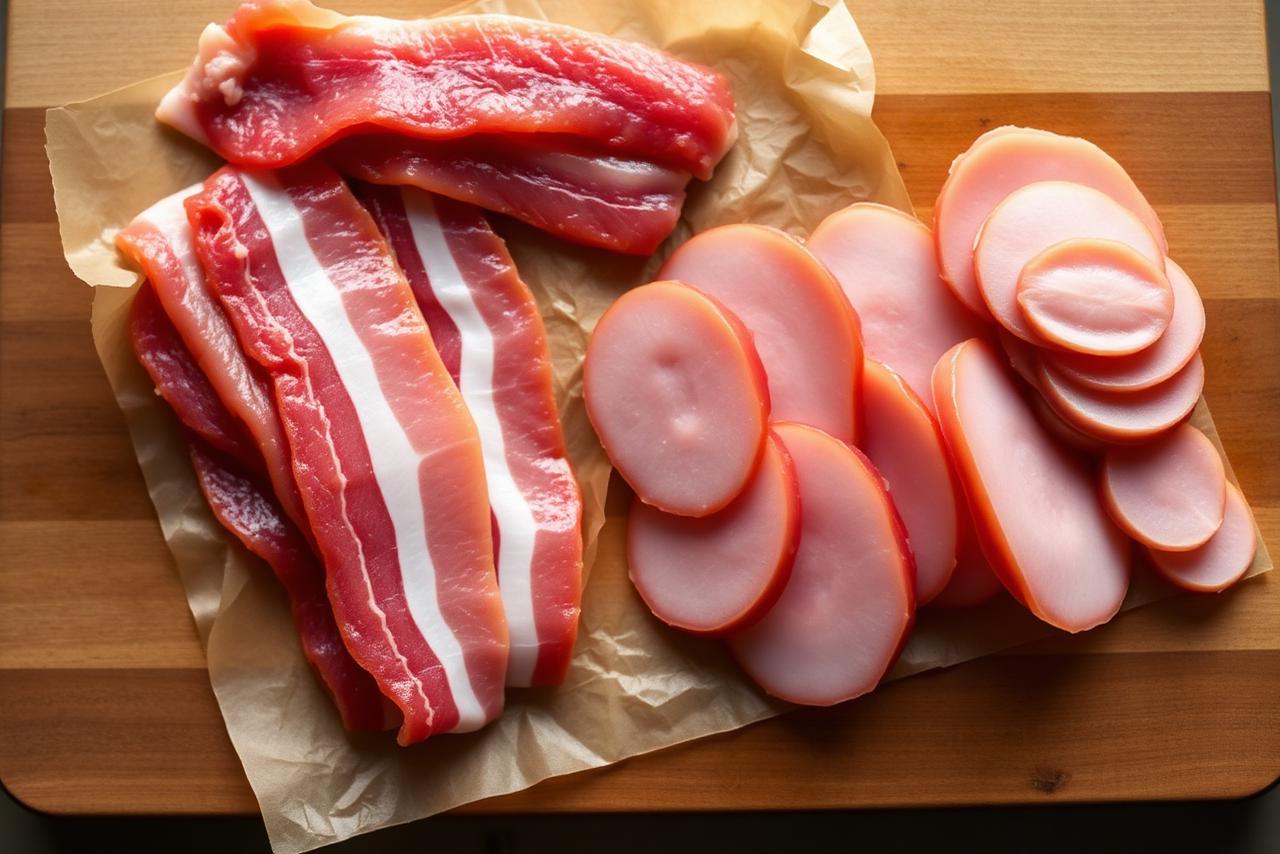
Sodium nitrite and nitrate in cured meats
The curing salts behind bacon and ham, and the mechanism behind the IARC Group 1 classification of processed meat.
6 min read

MSG (monosodium glutamate)
The most-misunderstood common additive. What the evidence actually shows about MSG, and why NOVA still flags it.
6 min read
Titanium dioxide (E171)
The white pigment banned in the EU in 2022 but still permitted in the US. Why regulators split, and where it still appears.
6 min read
Tartrazine (Yellow 5, E102)
The yellow food dye behind mustards, sodas, and candy. What the Southampton study found, and the label warning the EU imposed.
6 min read
Frequently asked questions
- Are food additives safe?
- Every additive on a US or EU shelf has passed a regulatory review, but 'passed a review' is not the same as 'proven inert.' The FDA GRAS pathway allows manufacturers to self-affirm safety, and EFSA re-evaluations have led to real removals — titanium dioxide (E171) was banned in the EU in 2022, brominated vegetable oil was banned in the US in 2024. NakedCalorie flags additives with contested or evolving evidence so users can decide what to accept in their own diet.
- What does an E-number mean?
- An E-number is the EU's traceability code for a food additive approved for use under Regulation (EC) No 1333/2008. The letter E stands for Europe. Every additive on the EU market has one — E100 for curcumin, E200 for sorbic acid, E621 for monosodium glutamate. The system is neutral: an E-number is neither a warning nor a certificate of safety, only an identifier.
- Is 'no artificial colours' meaningful on a label?
- Sometimes. It rules out synthetic dyes like Red 40, Yellow 5, and Blue 1 but says nothing about caramel colour (E150c, E150d), annatto (E160b), beet juice, or paprika oleoresin — all of which are 'natural' colours with their own regulatory histories. Caramel colour class III and IV, in particular, are subject to state-of-California warning labels for the 4-methylimidazole they can contain.
- How does NakedCalorie weight additive load?
- The score counts three things: total number of distinct additive classes on the label, presence of specific evidence-linked additives (Tier 2 and Tier 3 in the ingredient encyclopedia), and any regulator-restricted additive that is still permitted in the jurisdiction of sale. A product with a dozen tier-1 ingredients is treated differently from a product with two tier-3 ingredients.
- Which additive was most recently banned in the US?
- Red 3 (erythrosine, FD&C Red No. 3). The FDA revoked its authorisation for use in food and ingested drugs in January 2025, 35 years after banning it in cosmetics. The revocation was triggered by a citizen petition invoking the Delaney Clause, which prohibits the addition of any substance shown to cause cancer in humans or animals. Reformulation deadlines run to January 2027 for food and January 2028 for ingested drugs.
- What is an Acceptable Daily Intake (ADI)?
- The ADI is the amount of an additive a person can consume every day for life without appreciable health risk, expressed in milligrams per kilogram of body weight per day. It is set by dividing the no-observed-adverse-effect level (NOAEL) from animal studies by a safety factor of 100. The ADI covers chronic exposure but not synergistic effects between additives, microbiome-mediated effects, or effects that emerge only from a Group 4 dietary pattern.
- Do 'natural' preservatives work as well as synthetic ones?
- For many uses, yes. Rosemary extract (E392), tocopherols (E306–309), and ascorbic acid (E300) all inhibit oxidation. Cultured celery powder supplies naturally occurring nitrites for cured meats. The trade-off is cost, shelf life, and consistency — synthetic preservatives are cheaper and more reproducible. NakedCalorie does not privilege 'natural' preservatives over synthetic ones in the score; the tier depends on the specific molecule and its evidence.
- Are any additives beneficial?
- Fortificants and antioxidants can be. Iodised salt has eliminated goitre in most industrialised countries. Folic-acid fortification of grain (mandatory in the US since 1998) reduces neural-tube-defect prevalence by an estimated 35%. Ascorbic acid, tocopherols, and rosemary extract prevent rancidity in ways that make oxidised-oil consumption less likely. The encyclopedia flags these as Tier 0 — neutral or beneficial.
Continue in the knowledge base