Knowledge base · Micronutrients
Micronutrients — vitamins and minerals that matter on the label
A micronutrient is a vitamin or mineral the body needs in milligram or microgram quantities to function. This is NakedCalorie's reference to the micronutrients most likely to appear as gaps or excesses in a Western diet — sodium, potassium, calcium, iron, magnesium, zinc, vitamin D, and vitamin B12 — with the DRIs, evidence, and how each one shapes the food-quality score.
What is a micronutrient?
A micronutrient is a nutrient the body requires in milligram or microgram quantities per day to function. The category comprises 13 essential vitamins and roughly 15 essential minerals, plus a handful of conditionally essential compounds (choline, carnitine, taurine) whose classification has shifted with the evidence.
Vitamins are organic molecules the body cannot synthesise in adequate quantities. They split into fat-soluble (A, D, E, K — stored in liver and adipose tissue, toxic in excess) and water-soluble (the eight B vitamins and vitamin C — largely excreted in urine, toxicity rare except for B6 at supplement doses). Minerals are inorganic elements: macrominerals needed in ≥100 mg/day (calcium, phosphorus, potassium, sodium, chloride, magnesium, sulphur) and trace minerals needed in <100 mg/day (iron, zinc, copper, manganese, iodine, selenium, molybdenum, chromium, fluoride).
Where macronutrients are graded on quantity, micronutrients are graded on adequacy. Deficiency causes named diseases (scurvy for vitamin C, pellagra for niacin, beriberi for thiamin, rickets for vitamin D, anaemia for iron, goitre for iodine). The public-health story of the 20th century was engineering those deficiencies out of the food supply through fortification — iodised salt in the 1920s, milk vitamin-D fortification in the 1930s, wheat B-vitamin enrichment in the 1940s, US folic-acid fortification in 1998. The story of the 21st century is a return of shortfalls hidden inside caloric abundance.
The DRI framework — EAR, RDA, AI, UL
The Institute of Medicine (now the National Academies) publishes four reference intakes for every established micronutrient. The RDA is the value most people know from food labels, but it is derived from the EAR and bounded by the UL.
- Estimated Average Requirement (EAR) — the intake that meets the needs of 50% of healthy people in a life stage.
- Recommended Dietary Allowance (RDA) — EAR + 2 standard deviations. Meets the needs of 97–98%. This is what the FDA Daily Value on Nutrition Facts panels is anchored to.
- Adequate Intake (AI) — used when data are insufficient to set an EAR. Set at the observed intake in apparently healthy populations. Fibre, potassium, and vitamin K have AIs, not RDAs.
- Tolerable Upper Intake Level (UL) — the highest chronic intake unlikely to cause adverse effects. Most matter for supplements: iron 45 mg, zinc 40 mg, calcium 2,500 mg, vitamin D 4,000 IU, folic acid 1,000 μg (from fortification + supplements).
The FDA Daily Value is set at the highest RDA across life stages (usually the pregnancy/lactation value or the adult male value). It is a single number that lets a label serve everyone; it is not a personalised target. Under-consumption vs the DV is more meaningful than exceeding it for most micronutrients other than sodium and (from supplements) iron and vitamin D.
Sodium — SSaSS 2021 and the population target
The Salt Substitute and Stroke Study (SSaSS; Neal et al., NEJM 2021) is the largest RCT ever conducted on dietary sodium. 20,995 adults at high cardiovascular risk in 600 Chinese villages were randomised to 25% potassium-substituted salt vs regular salt for a mean 4.7 years. Stroke was 14% lower in the intervention arm; major cardiovascular events 13% lower; all-cause mortality 12% lower.
The 2020 Cochrane review of long-term sodium-reduction RCTs (Adler et al.) confirmed dose-dependent blood-pressure reductions in normotensive and hypertensive adults. WHO's population target is <2,000 mg sodium/day (equivalent to <5 g salt). Mean US intake is ~3,400 mg (NHANES 2019–2020) — 70% from packaged and restaurant foods, not the salt shaker. The 2020 IOM Chronic Disease Risk Reduction intake is 2,300 mg/day, which is what the FDA Daily Value reflects. See sodium.
Potassium and DASH
The DASH trials (Dietary Approaches to Stop Hypertension; Appel et al., NEJM 1997, Sacks 2001) established that a diet rich in potassium (~4,700 mg/day from fruit, vegetables, dairy, and legumes) reduced systolic blood pressure by 5.5 mmHg on average and up to 11 mmHg in hypertensive participants. Aburto et al. (BMJ 2013) meta-analysed 22 potassium trials and 11 cohorts and found each 24 mmol/day increase reduced stroke risk by 24%.
The IOM's Adequate Intake for potassium is 3,400 mg/day for men and 2,600 mg/day for women. Mean US intake is 2,300–2,700 mg/day. Potassium is one of the "nutrients of public-health concern" flagged by the 2020–2025 Dietary Guidelines. See potassium.
Calcium — bone, cardiovascular, and the IOM RDAs
The IOM 2011 calcium report set the adult RDA at 1,000 mg/day (women 51+ and men 71+: 1,200 mg) with a UL of 2,500 mg. Dairy, fortified plant milks, tofu made with calcium sulphate, canned sardines and salmon with bones, and leafy greens (excluding spinach and chard, whose oxalate binds calcium) are the practical sources.
The Bolland et al. 2015 BMJ meta-analysis of 51 calcium-supplement RCTs found little effect on fracture prevention in community-dwelling adults, reopening the question of whether supplements above the RDA add value. The signal for calcium supplements + vitamin D remains positive in institutionalised older adults (Weaver et al. 2016). See calcium.
Iron — heme vs non-heme and the WHO anaemia data
Iron deficiency remains the largest single cause of anaemia globally. The WHO 2023 Anaemia Estimates put worldwide anaemia prevalence at 30% (women of reproductive age: 37%; children under 5: 40%). Iron in food comes in two forms with very different bioavailability: heme iron (from muscle myoglobin and haemoglobin — meat, poultry, fish) at 15–35% absorption, and non-heme iron (from plants and fortificants) at 2–20%.
Non-heme absorption is boosted by vitamin C in the same meal (converting Fe3+ to Fe2+) and inhibited by phytates (whole grains, legumes), polyphenols (tea, coffee), and calcium. The US RDA is 8 mg/day for men and post-menopausal women, 18 mg/day for menstruating women, 27 mg/day in pregnancy. The UL is 45 mg/day; supplement doses that push toward the UL cause GI symptoms and, in genetic haemochromatosis, iron overload. See iron.
Magnesium and zinc
Magnesium is a cofactor in over 300 enzymatic reactions and a shortfall nutrient in most Western surveys — mean US intake ~250 mg/day vs an RDA of 320–420 mg/day. Zinc supports immune function, wound healing, and protein synthesis; the RDA is 8 mg/day for women and 11 mg/day for men, with a UL of 40 mg/day.
Magnesium is abundant in whole grains, legumes, nuts, seeds, and leafy greens — all foods that are stripped or replaced in ultra-processed diets, which is why the shortfall tracks the NOVA-4 share of energy. Cazzola et al. 2020 (Br J Nutr) reviewed the association between magnesium intake and cardiovascular disease across 42 cohorts and found a dose-dependent inverse relationship. Zinc deficiency is a public-health issue globally, in part because phytate in unrefined plant staples binds zinc — the IZiNCG framework adjusts requirement upward for high-phytate diets. See magnesium and zinc.
Vitamin D — VITAL 2019 and the Jolliffe 2021 respiratory-infection meta-analysis
The VITAL RCT (Manson et al., NEJM 2019) randomised 25,871 US adults to 2,000 IU vitamin D3/day + 1 g/day marine omega-3 vs placebo for a median 5.3 years. There was no reduction in the primary cardiovascular composite, no reduction in invasive cancer, no reduction in fractures. The Jolliffe 2021 meta-analysis (Lancet Diabetes & Endocrinology) of 46 vitamin-D respiratory-infection RCTs found a small but significant 8% reduction in acute respiratory infections, most pronounced with daily (not bolus) dosing and starting 25(OH)D <25 nmol/L.
The IOM RDA is 600 IU (15 μg) for adults up to age 70, 800 IU (20 μg) 71+, with a UL of 4,000 IU. The Endocrine Society recommends up to 2,000 IU/day for at-risk adults. Serum 25-hydroxyvitamin D <30 nmol/L (12 ng/mL) is deficient by IOM criteria; 30–50 nmol/L is insufficient; ≥50 nmol/L is adequate. See vitamin D.
Vitamin B12
Vitamin B12 is unique among vitamins in that it is synthesised only by bacteria and archaea, concentrated up the food chain into animal foods. Vegan diets require B12 fortification or supplementation to meet the RDA of 2.4 μg/day. In older adults, B12 absorption falls with declining stomach acid — the 2020 US Dietary Guidelines recommend fortified foods or supplements for adults over 50 regardless of diet.
B12 deficiency causes megaloblastic anaemia and irreversible peripheral neuropathy if prolonged. Serum B12 <150 pmol/L with elevated methylmalonic acid confirms deficiency. Fortified plant milks, nutritional yeast, and cyanocobalamin/methylcobalamin supplements are the reliable non-animal sources. See vitamin B12.
Fortification vs whole-food sources
Mandatory fortification has eliminated named-deficiency diseases at population scale — iodised salt for goitre, wheat enrichment for pellagra and beriberi, folic-acid fortification for neural-tube defects. The question is whether fortification of ultra-processed foods creates offsetting benefits or masks a lower-quality dietary pattern.
The evidence pattern: fortification works for the specific target nutrient at the population scale; it does not confer whole-food benefits (fibre matrix, phytonutrients, satiety) that come with the food matrix Reynolds 2019 and Reynolds 2020 both flagged. NakedCalorie treats fortified nutrients as a partial credit — real, but discounted against the same nutrient from a whole-food source — because the outcome evidence stratifies that way.
How NakedCalorie scores micronutrients
Two axes: a positive per-100-kcal density credit for whole-food micronutrient sources, and a sodium penalty tied to the WHO 2,000 mg/day target. Fortification counts at ~50% of the whole-food credit; added B-vitamins in a NOVA-4 breakfast cereal do not offset the ultra-processing penalty.
- Density credit. Per 100 kcal, foods hitting ≥15% DV of one or more "public-health-concern" nutrients (calcium, potassium, iron, magnesium, fibre, vitamin D) score higher.
- Sodium penalty. Scored against 5% DV / 20% DV thresholds per serving and the WHO daily cap.
- Fortification discount. Iron-fortified white flour, vitamin-D-fortified milk, and calcium-fortified plant milks are credited at partial weight.
See What's Inside for the complete methodology.
Browse every article in this hub

Sodium
The nutrient with the largest gap between recommended and actual intake — and the ingredient most driven by the packaged food supply.
8 min read
Iron
The most prevalent nutritional deficiency in the world, and the one where whole-food source and matrix drive bioavailability more than the number on the label.
8 min read

Vitamin D
The one micronutrient many adults cannot get enough of from food alone — and the one where the RCT record is more modest than the marketing.
8 min read
Vitamin B12
The one nutrient absent from unfortified plant foods, and the reason cobalamin status testing matters more with age.
7 min read
Calcium
The bone-and-nerve mineral where source (dairy, greens, tofu) matters more than dose above the RDA.
7 min read
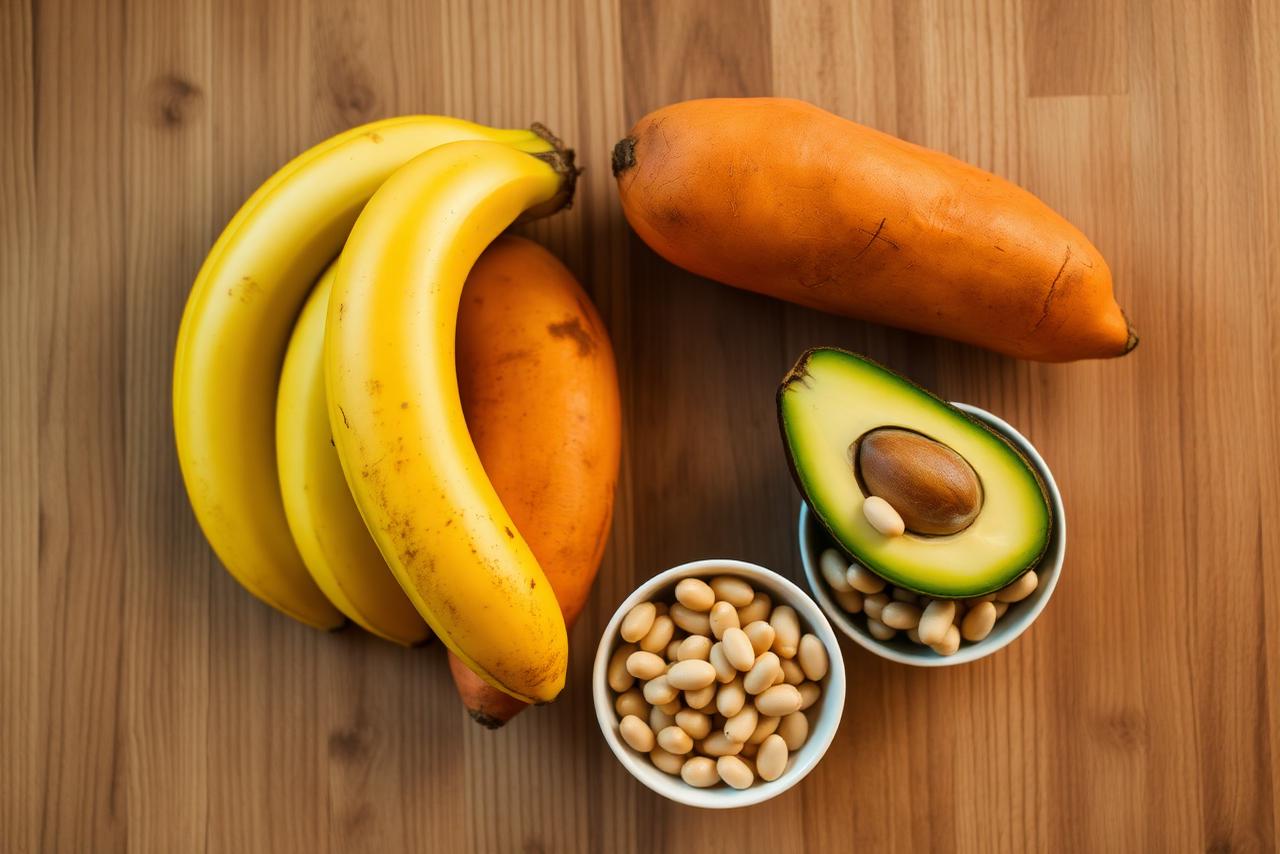
Potassium
The mineral most adults get too little of — and the one that blunts the blood-pressure effect of sodium.
7 min read

Magnesium
The under-consumed micronutrient behind cardiac, metabolic, and neuromuscular signalling — and one of the clearest whole-food-versus-supplement stories.
7 min read
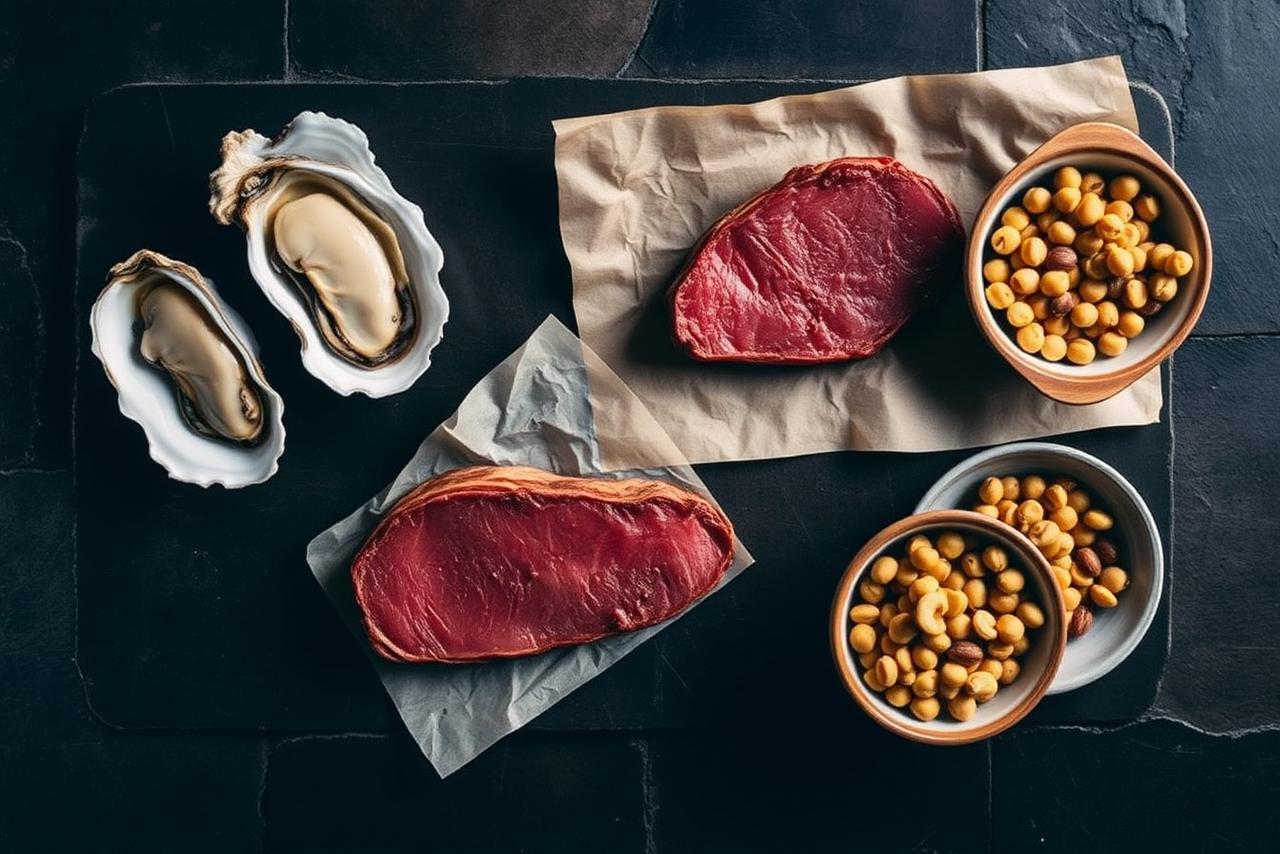
Zinc
The immune-and-DNA-signalling mineral where phytate content and animal-vs-plant source drive absorption more than the label number.
7 min read
Frequently asked questions
- What are the DRIs and how are they set?
- Dietary Reference Intakes are the umbrella term for four reference values set by the Institute of Medicine (now the National Academies): the Estimated Average Requirement (EAR, meets needs of 50%), the Recommended Dietary Allowance (RDA, meets needs of 97–98%), the Adequate Intake (AI, when data are insufficient for an RDA), and the Tolerable Upper Intake Level (UL, the highest safe chronic intake). EFSA publishes parallel values as Dietary Reference Values.
- Which micronutrients are most commonly under-consumed in the US?
- The 2020–2025 Dietary Guidelines list vitamin D, calcium, potassium, and fibre as 'nutrients of public health concern' — under-consumption to the point of associated disease risk. NHANES 2019–2020 also documented shortfalls of magnesium (mean intake ~250 mg/day vs 320–420 mg/day RDA) and choline in most age groups.
- Is sodium as harmful as the guidelines say?
- The SSaSS RCT (Neal et al., NEJM 2021) randomised 20,995 people at high cardiovascular risk in 600 Chinese villages to a 25% potassium-substituted salt vs regular salt for a mean 4.7 years. The intervention arm had 14% fewer strokes and 12% fewer cardiovascular events. The 2020 Cochrane review of long-term sodium-reduction trials showed dose-dependent blood-pressure reduction. WHO's target is <2,000 mg sodium/day; mean US intake is ~3,400 mg.
- Do I need a vitamin D supplement?
- It depends on latitude, skin tone, sun exposure, and body composition. The VITAL RCT (Manson et al., NEJM 2019) randomised 25,871 US adults to 2,000 IU vitamin D3/day vs placebo for a median 5.3 years and found no reduction in cardiovascular events, cancer, or fractures. The Jolliffe 2021 meta-analysis (Lancet Diabetes & Endocrinology) of 46 RCTs found a small reduction in acute respiratory-infection risk. Testing and targeted supplementation for people with serum 25(OH)D <30 nmol/L is the evidence-supported approach.
- Is heme iron better absorbed than non-heme iron?
- Yes — heme iron (from meat, poultry, fish) is absorbed at ~15–35%, non-heme iron (from plants, fortified grains, supplements) at ~2–20%. Non-heme absorption is boosted by vitamin C in the same meal and inhibited by phytates, polyphenols, and calcium. The WHO 2023 anaemia estimate is 30% globally (adults + children), with iron deficiency the largest single cause.
- Can food fortification replace whole-food sources?
- For some nutrients, yes. Folic-acid fortification of US grain (mandatory 1998) reduced neural-tube-defect prevalence by ~35%. Iodised salt eliminated goitre in most industrialised countries. Vitamin D fortification of milk closes latitude-driven shortfalls. NakedCalorie counts fortificants toward the micronutrient credit but discounts them relative to the whole-food matrix.
- What is a Tolerable Upper Intake Level and does it matter for food?
- The UL is the highest chronic intake unlikely to cause harm. It matters most for supplements, where doses can exceed food levels 10–100×. Selected ULs: iron 45 mg/day, zinc 40 mg/day, calcium 2,500 mg/day, vitamin D 4,000 IU/day, magnesium 350 mg/day (from supplements only — food magnesium is uncapped).
- How does NakedCalorie use micronutrient content in the score?
- A per-100-kcal micronutrient density credit is applied for whole-food sources; a separate discount applies when the density comes from fortification. Sodium is a penalty tied to the WHO 2,000 mg/day target. Added B-vitamin fortification in ultra-processed foods does not offset the NOVA-4 penalty.
Continue in the knowledge base