
Calcium
Calcium is the essential mineral in bones and teeth and the ion that triggers muscle contraction, neurotransmitter release, and blood clotting. The IOM RDA is 1,000 mg/day for adults 19–50 and 1,200 mg/day for women 51+ and adults 71+. Dietary sources drive skeletal outcomes better than supplements in most cohort and RCT data.
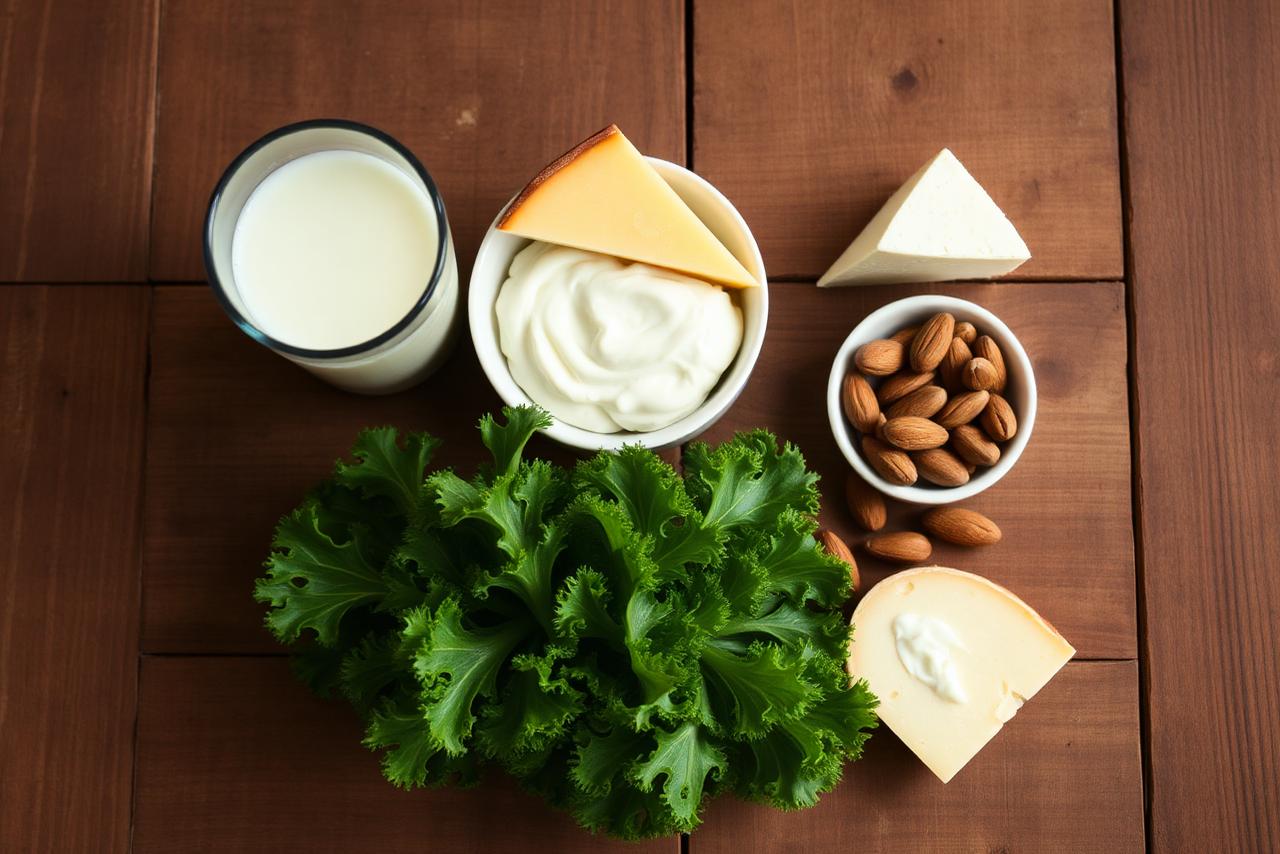
What calcium does
The adult skeleton holds about 99% of body calcium — approximately 1 kg — as hydroxyapatite crystals in bone and teeth. The remaining 1% circulates in plasma and cytosol, where it triggers muscle contraction, neurotransmitter release at synapses, coagulation-cascade activation, and second-messenger signalling in most cell types. Plasma calcium is held in a narrow range (~2.2–2.6 mmol/L) by parathyroid hormone, calcitonin, and 1,25-dihydroxyvitamin D — when dietary intake falls short, the body pulls calcium from bone to defend the plasma set-point.
Intake references
- IOM RDA: 1,000 mg/day (adults 19–50, men 51–70); 1,200 mg/day (women 51+, all adults 71+); 1,300 mg/day (adolescents 9–18).
- EFSA PRI: 950 mg/day for adults.
- UL (IOM): 2,500 mg/day (adults 19–50); 2,000 mg/day (51+).
Sources and bioavailability
| Food | Calcium per serving | Fractional absorption |
|---|---|---|
| Milk / yoghurt (1 cup) | ~300 mg | ~32% |
| Cheddar (1 oz) | ~200 mg | ~32% |
| Calcium-set tofu (½ cup) | ~350 mg | ~30% |
| Sardines with bones (3 oz) | ~325 mg | ~27% |
| Kale, cooked (1 cup) | ~180 mg | ~50% |
| Spinach, cooked (1 cup) | ~245 mg | ~5% (oxalate) |
| Fortified almond milk (1 cup) | ~450 mg | ~24% |
Bones, and the diminishing returns of supplements
Fracture-risk RCTs at supplemental doses of 1,000–1,200 mg/day (WHI, JAMA 2006;296:2822–2831; Bolland meta-analysis 2015) show only small fracture-risk reductions in community-dwelling adults with adequate dietary intake, and a possible cardiovascular signal at high supplemental dose. The current US Preventive Services Task Force position (2018) is against routine supplementation in community-dwelling postmenopausal women; diet-first, with vitamin D and protein targeted where they are the actual gap.
How NakedCalorie treats calcium
Calcium is shown per serving in mg and as % Daily Value (1,300 mg reference). Fortified calcium in a Group 4 formulation does not raise the food-quality score above what the NOVA group earns. See magnesium and vitamin D for the co-nutrients relevant to skeletal outcomes.
Frequently asked questions
- How much calcium do adults need?
- The IOM RDA is 1,000 mg/day for adults 19–50 and men 51–70, and 1,200 mg/day for women 51+ and everyone 71+. EFSA uses 950 mg/day as the population reference intake.
- Do I have to drink milk to get enough?
- No. Dairy is the densest per-calorie source (~300 mg per cup of milk or yoghurt), but calcium-set tofu (~350 mg/half cup), sardines with bones (~325 mg/3 oz), collards (~270 mg/cup cooked), and fortified plant milks all hit the same range.
- Should adults take a calcium supplement?
- Meta-analyses of supplemental calcium (Bolland, BMJ 2015;351:h4580) show only small fracture-risk reductions in community-dwelling adults and possible cardiovascular signal at high supplemental doses. Diet-first is the current guideline position (US Preventive Services Task Force 2018).
- How well is calcium absorbed?
- Absorption from dairy and set tofu runs ~30%. Kale, bok choy, and broccoli are 40–60% (low oxalate). Spinach and rhubarb are under 5% because their high oxalate binds calcium in the gut. Supplements sit at 20–40% depending on formulation and dose (Straub, Nutrition in Clinical Practice 2007;22:286–296).
- Does calcium interact with iron?
- Yes. Calcium taken in the same meal reduces non-heme iron absorption by 20–60%. In practice, take iron supplements away from calcium-rich meals — the effect on habitual dietary intake at typical amounts is small.
Written by NakedCalorie editorial team.
Medically reviewed by Pending registered dietitian review — last reviewed July 15, 2026.
Educational information only, based on peer-reviewed literature and regulatory sources. Not medical advice.
Related in the knowledge base