Knowledge base · Food labeling
Food labeling — Nutrition Facts, allergens, and label claims
A food label is a regulated contract between the manufacturer and the consumer. This is NakedCalorie's reference to what has to appear on a US or EU label, what the claims on the front actually mean, and how to read a Nutrition Facts panel with the same accuracy the regulators intended.
Why food labels exist
Food labelling regulation exists to give consumers the information they need to make an informed choice and to protect them from misleading claims. The modern US regime dates to the Nutrition Labeling and Education Act of 1990 (NLEA); the modern EU regime to Regulation (EC) No 1169/2011 (the Food Information for Consumers Regulation, or FIC).
Before NLEA, US nutrition labelling was voluntary except for products making a nutrition claim. NLEA made a standardised nutrition panel mandatory on virtually all packaged foods, defined regulated terms like "low fat" and "high fibre," and created the framework for FDA-authorised health claims. The EU's earlier framework was fragmented across directives on general labelling (2000/13/EC) and nutrition labelling (90/496/EEC); FIC consolidated them and made nutrition declaration mandatory for pre-packaged foods from December 2016.
The US Nutrition Facts panel — the 2016 revision
The FDA's 2016 final rule (81 FR 33741) was the first substantive redesign of the Nutrition Facts panel since 1993. The changes reflected a quarter-century of updated dietary evidence, the added-sugar policy shift, and NHANES data on how much Americans actually eat per serving.
- Added Sugars line — mandatory, in grams and %DV, with a DV of 50 g (10% of 2,000 kcal, aligned with the WHO free-sugar cap).
- Updated serving sizes — 21 CFR 101.12 Reference Amounts Customarily Consumed (RACCs) were revised: ice cream from 1/2 cup to 2/3 cup, soft drinks from 8 fl oz to 12 fl oz, yogurt from 8 oz to 6 oz.
- Dual-column labels — required for packages containing 2–3 servings that could reasonably be consumed in one sitting.
- Vitamin D and potassium — replaced Vitamins A and C as the mandatory micronutrients, reflecting under-consumption concerns.
- Updated Daily Values — sodium DV lowered from 2,400 mg to 2,300 mg; fibre DV raised from 25 g to 28 g.
- Enlarged calorie type — the calorie count is now visually dominant on the panel.
Compliance deadlines: large manufacturers (annual food sales ≥ $10 million) by January 2020; small manufacturers by January 2021. See Nutrition Facts panel.
The EU FIC Regulation 1169/2011
Regulation (EC) No 1169/2011 requires a mandatory "big 7" nutrition declaration per 100 g or 100 ml on virtually all pre-packaged foods sold in the EU: energy (kJ and kcal), total fat, saturates, carbohydrate, sugars, protein, and salt. Optional add-ons include mono/polyunsaturates, polyols, starch, fibre, and any vitamin or mineral present in significant quantity.
Two features distinguish the EU panel from the US panel. First, values are expressed per 100 g / 100 ml, not per serving — this makes cross-product comparison much easier because everything is on the same denominator. Second, "salt" (not sodium) is the mandatory declaration, calculated as sodium × 2.5 to reflect the equivalent as sodium chloride. Allergen highlighting in the ingredient list (bold, capitals, italics, or underline) is mandatory under Annex II. See EU food label.
Front-of-pack schemes
Front-of-pack (FOP) schemes are graphical summaries designed to communicate nutrition quality at glance. They split into three families: interpretive (Nutri-Score, UK traffic lights), warning (Chilean, Mexican, Israeli black octagons), and reference-intake (EU voluntary GDA percentages).
- Nutri-Score — 5-tier A–E colour scale developed by the French agency Santé publique France. Adopted voluntarily in France, Belgium, Germany, Luxembourg, Netherlands, Switzerland, Spain.
- Chilean warning labels — black octagons for products high in calories, sodium, sugar, or saturated fat. Combined with marketing and school-sales restrictions. Taillie et al. 2020 (PLOS Medicine) documented a 24% reduction in sugar-sweetened beverage purchases post-implementation.
- UK traffic lights — voluntary since 2013. Red/amber/green colour bands for fat, saturated fat, sugar, and salt per 100 g or per serving.
- FDA proposed rule — a mandatory US front-of-pack scheme is under development, with a proposed rule that the FDA has said will focus on saturated fat, sodium, and added sugars.
See front-of-pack labels.
Allergen labeling — FALCPA vs Annex II
The US Food Allergen Labeling and Consumer Protection Act (2004), expanded by the FASTER Act (2021), requires declaration of nine major allergens: milk, eggs, fish, crustacean shellfish, tree nuts, peanuts, wheat, soybeans, and sesame (added April 2023). The EU FIC Annex II requires fourteen: the nine plus celery, mustard, sulphites (>10 mg/kg), lupin, and molluscs.
Under both regimes the allergen must be identified in plain language (a "Contains: milk, wheat" statement in the US; emphasis in the ingredient list in the EU). "May contain" precautionary statements are voluntary in both jurisdictions and unregulated — Bedford et al. 2017 (Allergy) found no correlation between precautionary statements and actual allergen levels detected in the product. See allergen labeling.
The 'natural' claim
'Natural' is the most litigated single word on the US food label. The FDA's long-standing informal policy is that natural means nothing artificial or synthetic (including all colour additives, regardless of source) has been included in, or has been added to, a food that would not normally be expected to be in that food. The agency has never codified this in regulation and, after a 2015 public comment docket, declined to define the term.
The USDA has stricter rules for meat and poultry (FSIS): 'natural' means minimally processed and containing no artificial ingredient. This is why a natural chicken breast means something specific but a natural cereal does not. Class-action litigation has produced settlements over natural claims on products containing GMOs, HFCS, and synthetic citric acid, but courts have split on whether these claims are misleading as a matter of law. See the natural claim.
Organic certification — USDA NOP vs EU 2018/848
The USDA National Organic Program (7 CFR 205, effective 2002) is the US framework for organic labelling. The EU's Regulation 2018/848 (in force since January 2022) is the parallel EU framework. The two are similar in core prohibitions and cross-recognised under the 2012 US-EU Organic Equivalence Arrangement, with a small number of exceptions.
Both prohibit synthetic pesticides (with narrow exceptions on the NOP National List), synthetic fertilisers, GMOs, sewage sludge, and irradiation. Both require organic feed for livestock and prohibit antibiotics and growth hormones. EU 2018/848 is stricter on greenhouse cultivation, bans hydroponic production for the EU seal (permitted under NOP for some crops), and has more prescriptive animal-welfare requirements. The '100% organic' vs 'organic' (95%) vs 'made with organic ingredients' (70%) tiered labelling is US-specific. See organic certification.
Claims taxonomy — nutrient content, health, and structure-function
US label claims split into three regulated categories, each with a different evidentiary bar.
- Nutrient-content claims ("low sodium", "high fibre", "excellent source of calcium") — regulated by FDA quantitative thresholds in 21 CFR 101.13. "Low sodium" means ≤140 mg per RACC; "high in fibre" means ≥5 g per RACC.
- Health claims ("adequate calcium may reduce the risk of osteoporosis", "diets low in saturated fat and cholesterol may reduce the risk of heart disease") — require FDA authorisation via NLEA or FDAMA petition. Twelve are currently authorised. A separate category of "qualified health claims" (post-Pearson v. Shalala, 1999) can be made with a qualifying disclaimer.
- Structure-function claims ("supports immune health", "helps maintain regularity") — require no pre-market FDA approval but must be truthful, non-misleading, and cannot claim to treat, cure, or prevent disease. Common on dietary supplements.
How does NakedCalorie read a label?
The scanner treats the label as three data sources: the ingredient list, the Nutrition Facts panel, and regulated claims metadata. Marketing text on the front of pack is collected for display but never raises a score — the underlying panel and ingredient data are authoritative.
- Ingredient list. Parsed to derive the NOVA group (see NOVA), identify Monteiro 2019 markers of ultra-processing, and tier every named additive against the encyclopedia.
- Nutrition Facts panel. Parsed to per-100-kcal density values for protein, fibre, added sugar, saturated fat, sodium, and the flagged micronutrients.
- Regulated claims. USDA Organic, Non-GMO Project verified, allergen statements, and geographic-origin claims are captured as verified metadata. Nutri-Score and FOP labels (where present) are displayed alongside the NakedCalorie score for cross-reference.
- Marketing text. "All natural", "clean label", "immune-boosting" and similar unregulated or lightly regulated claims are collected but do not enter the score calculation.
Browse every article in this hub
The Nutrition Facts panel (US)
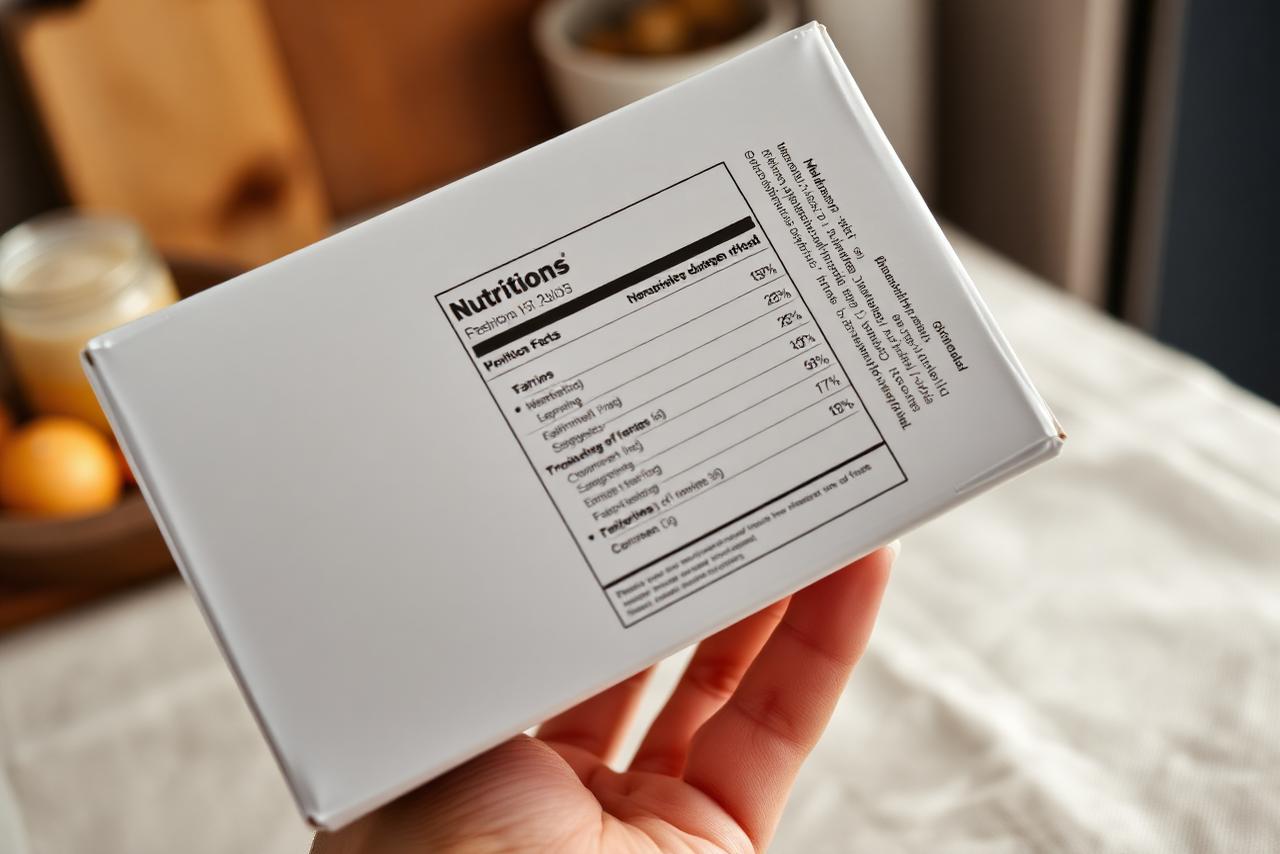
The US mandatory nutrient declaration — how to read every line, what changed in 2016, and where the panel still misses the shopper's real question.
8 min read
The EU nutrition declaration
The EU equivalent of the Nutrition Facts panel — per-100 g reference, salt rather than sodium, and no separate added-sugars line.
7 min read
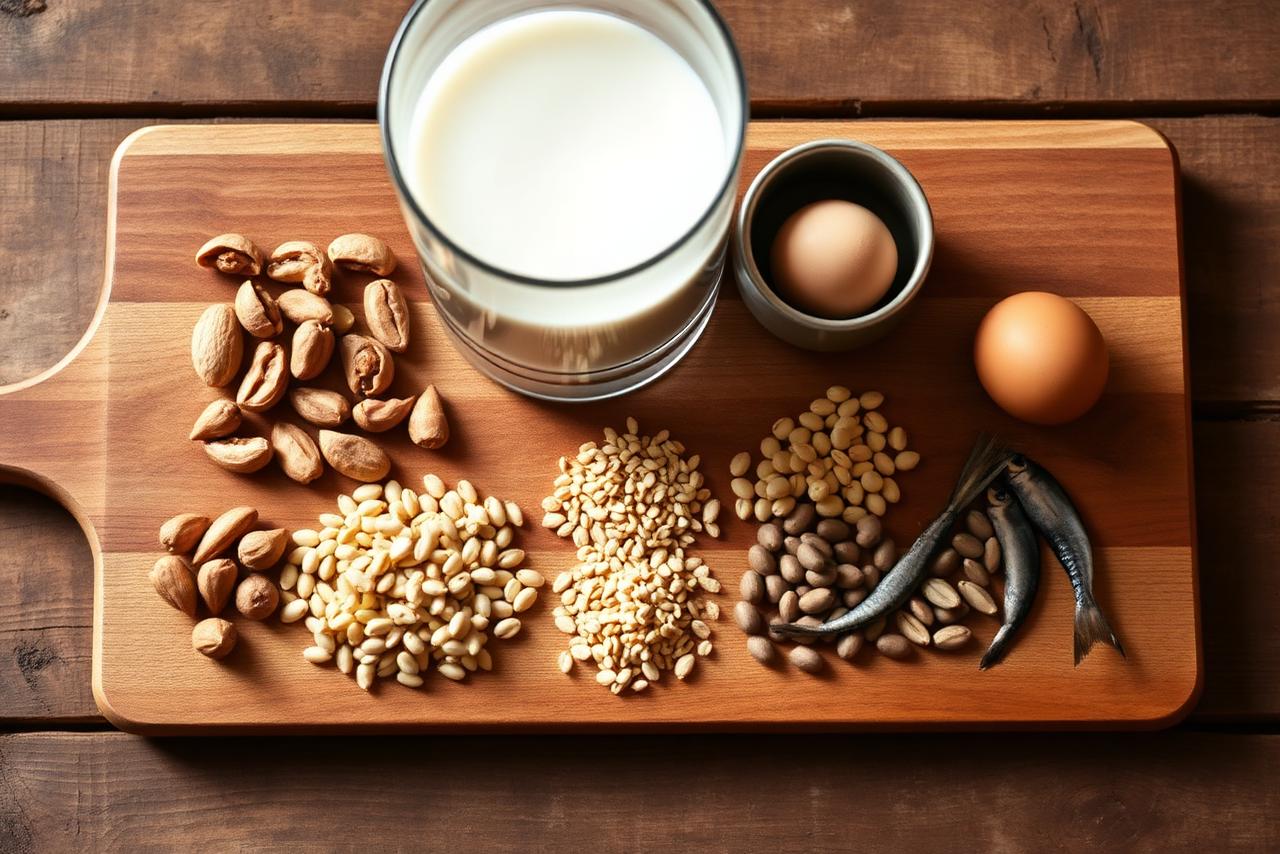
Allergen labelling
What must be declared, what is voluntary, and where the US and EU rules diverge — plus the cross-contact gap that affects everyone with a serious allergy.
7 min read
'Natural' on a food label
The most-abused word on food packaging — regulatory status in the US and EU, the FTC's parallel role, and why it does not appear in the score.
6 min read
Organic certification
A production-method certification, not a nutrition claim — what USDA Organic and the EU organic leaf actually guarantee, and what they do not.
7 min read
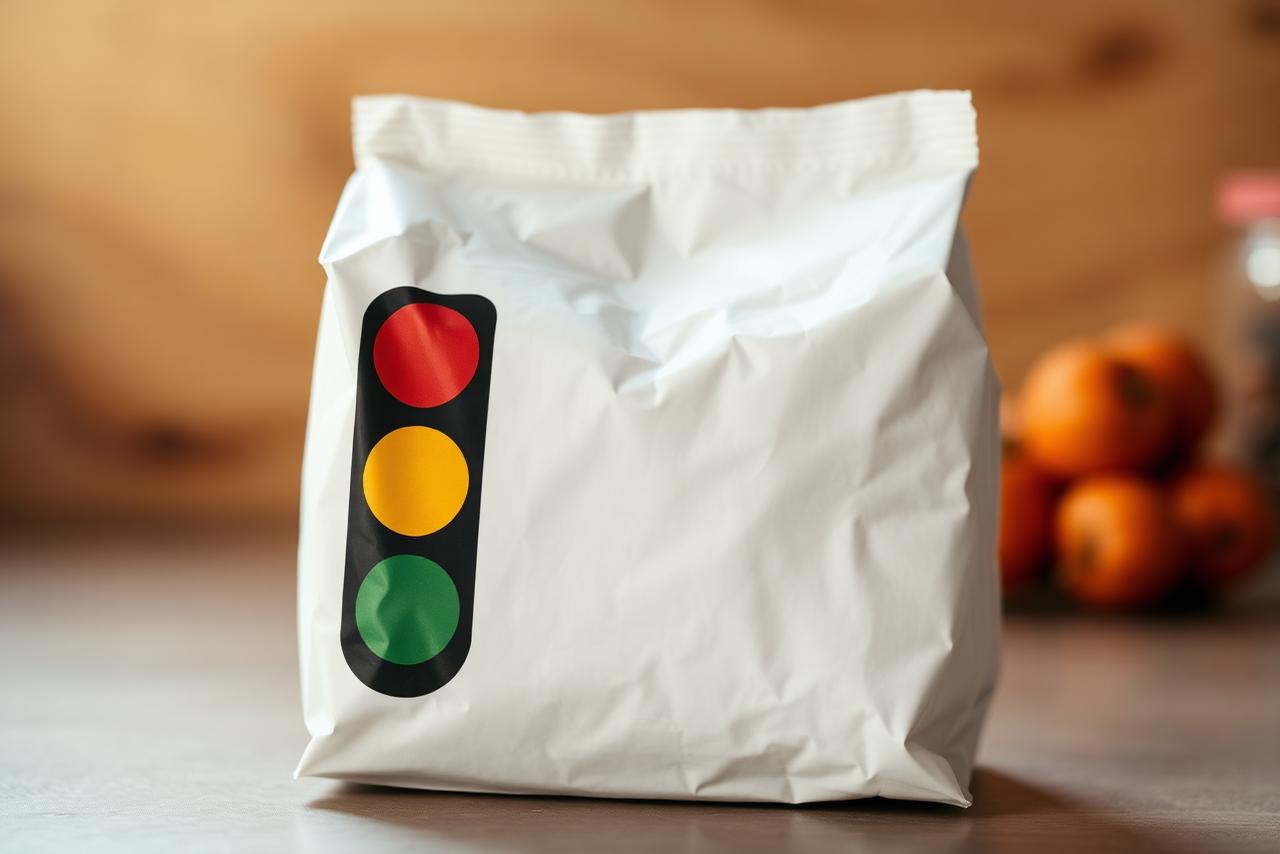
Front-of-pack labels
Traffic lights, Nutri-Score, warning octagons. The summary indicators complementing the full nutrition panel.
7 min read
Frequently asked questions
- Why did the US Nutrition Facts panel change in 2016?
- The FDA's 2016 final rule (81 FR 33741) was the first major revision since 1993. It added a mandatory Added Sugars line with a 50 g Daily Value, updated serving sizes to reflect what people actually eat (the ice-cream serving went from 1/2 cup to 2/3 cup), enlarged the calorie type, and replaced Vitamins A and C with Vitamin D and Potassium as the required micronutrients. Large manufacturers complied by 2020; small manufacturers by 2021.
- What does 'natural' mean on a US food label?
- Effectively nothing enforceable. The FDA has no formal definition and has repeatedly declined to write one; its long-standing policy is that 'natural' means nothing artificial or synthetic has been included that would not normally be expected. The USDA has stricter rules for meat and poultry: 'natural' means minimally processed with no artificial ingredients, but explicitly does NOT address hormones, antibiotics, or animal welfare. See our 'natural' claim entry for the litigation history.
- How many allergens must be declared on a US vs EU label?
- The US Food Allergen Labeling and Consumer Protection Act (FALCPA 2004, expanded by FASTER Act 2021) requires declaration of 9 major allergens: milk, eggs, fish, crustacean shellfish, tree nuts, peanuts, wheat, soybeans, and sesame. The EU Food Information for Consumers Regulation (1169/2011, Annex II) requires 14: those 9 plus celery, mustard, sulphites (>10 mg/kg), lupin, and molluscs.
- What is Nutri-Score and where is it used?
- Nutri-Score is a voluntary front-of-pack label developed in France (Hercberg et al., 2017) that grades a food from A (dark green, best) to E (dark red, worst) based on a 100 g composite of positive (fibre, protein, fruit/vegetable/legume content) and negative (calories, saturated fat, sugar, sodium) components. Adopted in France, Belgium, Germany, Luxembourg, Netherlands, Switzerland, and Spain. Rejected by Italy over concerns about traditional Mediterranean products (olive oil scores C).
- What is the difference between a nutrient-content claim, a health claim, and a structure-function claim?
- A nutrient-content claim describes the level of a nutrient ('low sodium', 'high in fibre') and is regulated by FDA quantitative thresholds. A health claim describes a relationship between a substance and a disease ('adequate calcium may reduce the risk of osteoporosis') and requires FDA authorisation. A structure-function claim describes an effect on normal body function ('supports immune health') and requires no pre-market approval but must be truthful and non-misleading.
- Is USDA Organic the same as EU Organic?
- Similar core rules, different specifics. USDA National Organic Program (7 CFR 205, 2002) requires 95% organic ingredients for the 'organic' seal, prohibits synthetic pesticides, GMOs, sewage sludge, and irradiation, and requires organic feed for livestock. EU Regulation 2018/848 (in force since 2022) is similar but includes stricter rules on greenhouse cultivation, hydroponics (banned for the EU seal), and animal welfare. The US-EU Organic Equivalence Arrangement (2012) allows most products certified under one to be sold in the other.
- Do front-of-pack warning labels change what people buy?
- Yes, in randomised and natural experiments. The Chilean warning labels (2016, black octagons for high-in sodium, sugar, saturated fat, or calories) were associated with a 24% reduction in sugar-sweetened beverage purchases (Taillie et al. 2020, PLOS Medicine). Nutri-Score in France showed smaller but consistent effects. The FDA is developing a mandatory front-of-pack scheme with a target proposed rule date in 2024–2025.
- How does NakedCalorie use label data?
- The scanner parses the ingredient list to derive NOVA classification, the Nutrition Facts panel to derive macro/micro density and per-serving added sugar/sodium load, and any regulated claim (organic, allergen, non-GMO) as metadata. Front-of-pack marketing claims ('all natural', 'no HFCS', 'immune-boosting') are collected but never used to raise a score — the underlying panel data is authoritative.
Continue in the knowledge base