
Allergen labelling
The US Food Allergen Labeling and Consumer Protection Act (FALCPA) and EU Regulation (EU) No 1169/2011 require major food allergens present as intentional ingredients to be highlighted on the label. The US currently mandates disclosure of nine major allergens; the EU mandates fourteen. Precautionary 'may contain' statements about cross-contact are voluntary and largely unregulated.
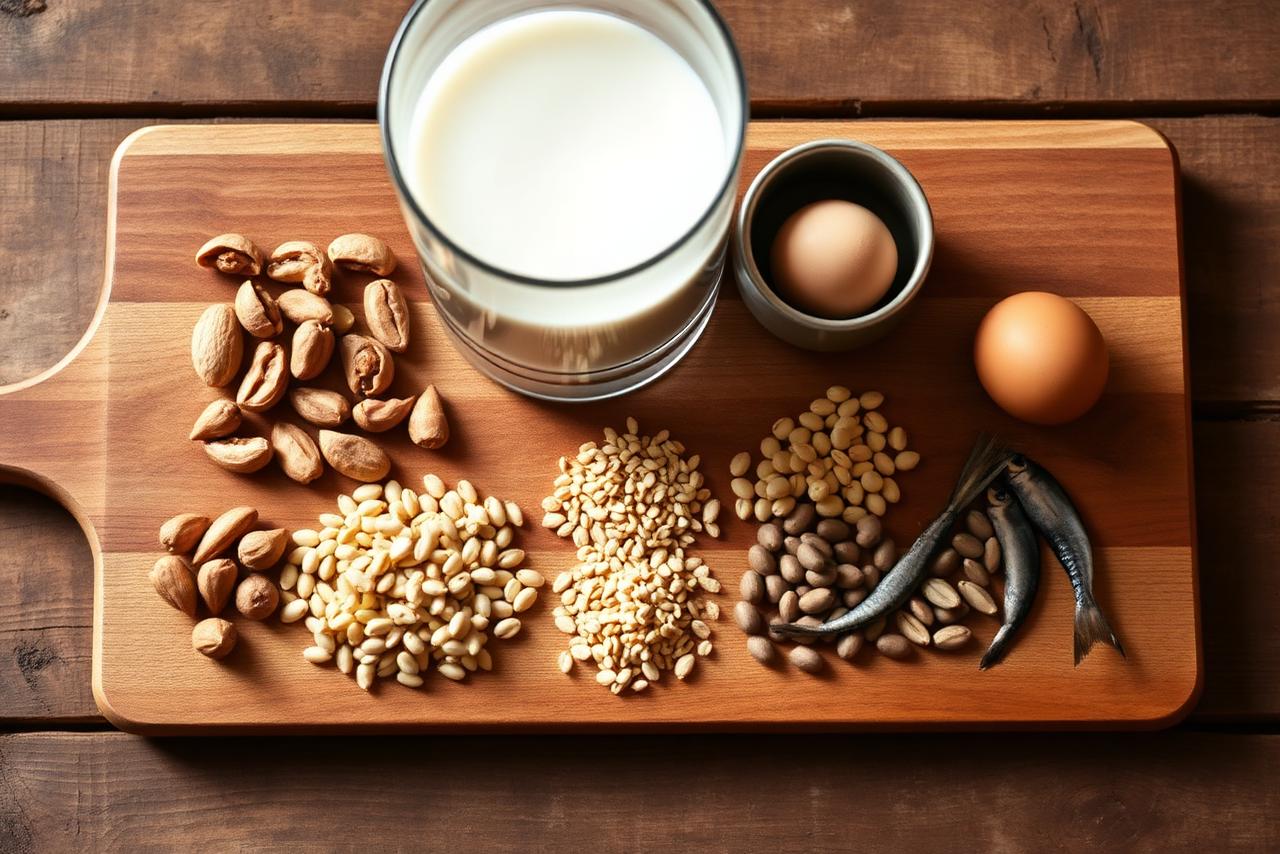
The two frameworks
The US Food Allergen Labeling and Consumer Protection Act (FALCPA), signed in 2004, requires food labels to identify the food source of any major allergen used as an intentional ingredient — either in the ingredient list itself or in a "Contains" statement immediately below. The FASTER Act 2021 added sesame as the ninth major allergen effective 1 January 2023. The EU covers fourteen allergens under Regulation (EU) No 1169/2011 Annex II, and requires the allergen ingredient to be emphasised (bold, italic, colour, or underline) within the ingredient list itself.
US vs EU at a glance
| Allergen | US (FALCPA + FASTER) | EU (FIC Annex II) |
|---|---|---|
| Milk | Yes | Yes (incl. lactose) |
| Eggs | Yes | Yes |
| Fish | Yes (species named) | Yes |
| Crustacean shellfish | Yes | Yes |
| Molluscs | Not mandatory | Yes |
| Tree nuts | Yes (species named) | Yes |
| Peanuts | Yes | Yes |
| Wheat / cereals with gluten | Yes (wheat only) | Yes (all gluten cereals) |
| Soybeans | Yes | Yes |
| Sesame | Yes (from 2023) | Yes |
| Celery | Not mandatory | Yes |
| Mustard | Not mandatory | Yes |
| Lupin | Not mandatory | Yes |
| Sulphites (> 10 mg/kg) | Yes (wine/beer) | Yes (all foods) |
The cross-contact problem
Both frameworks address ingredients on the recipe — not accidental cross-contact from shared equipment. Statements like "may contain traces of nuts", "produced in a facility that also handles milk", or "not suitable for people with a peanut allergy" are voluntary. There is no statutory threshold specifying when such a statement must be applied. FDA published draft guidance on precautionary allergen labelling in 2024 but has not finalised a rule. The most rigorous voluntary framework is VITAL (Voluntary Incidental Trace Allergen Labelling), developed in Australia/New Zealand, which sets action levels based on reference doses that would trigger symptoms in the most sensitive 5% of allergic individuals.
Gluten and specific claims
FDA (2013) and Regulation (EC) No 41/2009 both set the threshold at less than 20 ppm gluten for foods labelled "gluten-free". "Very low gluten" (20–100 ppm) is an EU-specific category used for certain reduced-gluten wheat starch products. Codex Alimentarius Standard 118-1979 harmonises the international definition at the same 20 ppm.
Non-obvious allergens on the label
Some ingredients trigger declaration because of their source: casein and whey (milk), albumin (egg), lecithin from soy or egg, hydrolysed vegetable protein (may be wheat or soy), natural flavourings (may derive from dairy). Both US and EU rules require the source of these ingredients to be named. See soy lecithin for a common example and sulphites for the additive class that requires declaration above threshold.
Frequently asked questions
- What are the US major allergens?
- As of 2023 (after the FASTER Act 2021): milk, eggs, fish, shellfish (crustaceans), tree nuts, peanuts, wheat, soybeans, and sesame. Sesame became the ninth major allergen effective 1 January 2023.
- What are the fourteen EU allergens?
- Cereals containing gluten, crustaceans, eggs, fish, peanuts, soybeans, milk (including lactose), tree nuts, celery, mustard, sesame, sulphur dioxide and sulphites above 10 mg/kg or 10 mg/L, lupin, molluscs.
- Does 'may contain nuts' have a legal meaning?
- In both jurisdictions, precautionary allergen labelling is voluntary and there is no statutory threshold. Practical guidance exists (VITAL in Australia/NZ, PAL in the UK) but is not law. An unlabelled product may carry residual allergen from shared production lines, and a labelled product may carry no meaningful risk — a long-standing frustration for people managing severe allergies.
- Are gluten-free labels regulated?
- Yes. The FDA (2013) and EU Regulation (EC) No 41/2009 both set a threshold of less than 20 ppm gluten for foods labelled 'gluten-free'. 'Very low gluten' (20–100 ppm) is an EU-specific category.
- What about the top allergens in other regions?
- Canada mandates 11 priority allergens (adds mustard and sesame to the US list). Australia and New Zealand require 10, including lupin. Japan mandates 8 (adds buckwheat), Korea 22. A product exported globally often carries multiple parallel allergen statements.
Written by NakedCalorie editorial team.
Medically reviewed by Pending registered dietitian review — last reviewed July 15, 2026.
Educational information only, based on peer-reviewed literature and regulatory sources. Not medical advice.
Related in the knowledge base
- Food labelingThe Nutrition Facts panel (US)
- Food labelingThe EU nutrition declaration
- Food labeling'Natural' on a food label