
Magnesium
Magnesium is the essential mineral cofactor for more than 300 enzymatic reactions, including ATP synthesis, protein synthesis, and blood-pressure regulation. The IOM RDA is 420 mg/day for adult men and 320 mg/day for adult women. NHANES data show roughly 50% of US adults consume less than the Estimated Average Requirement.
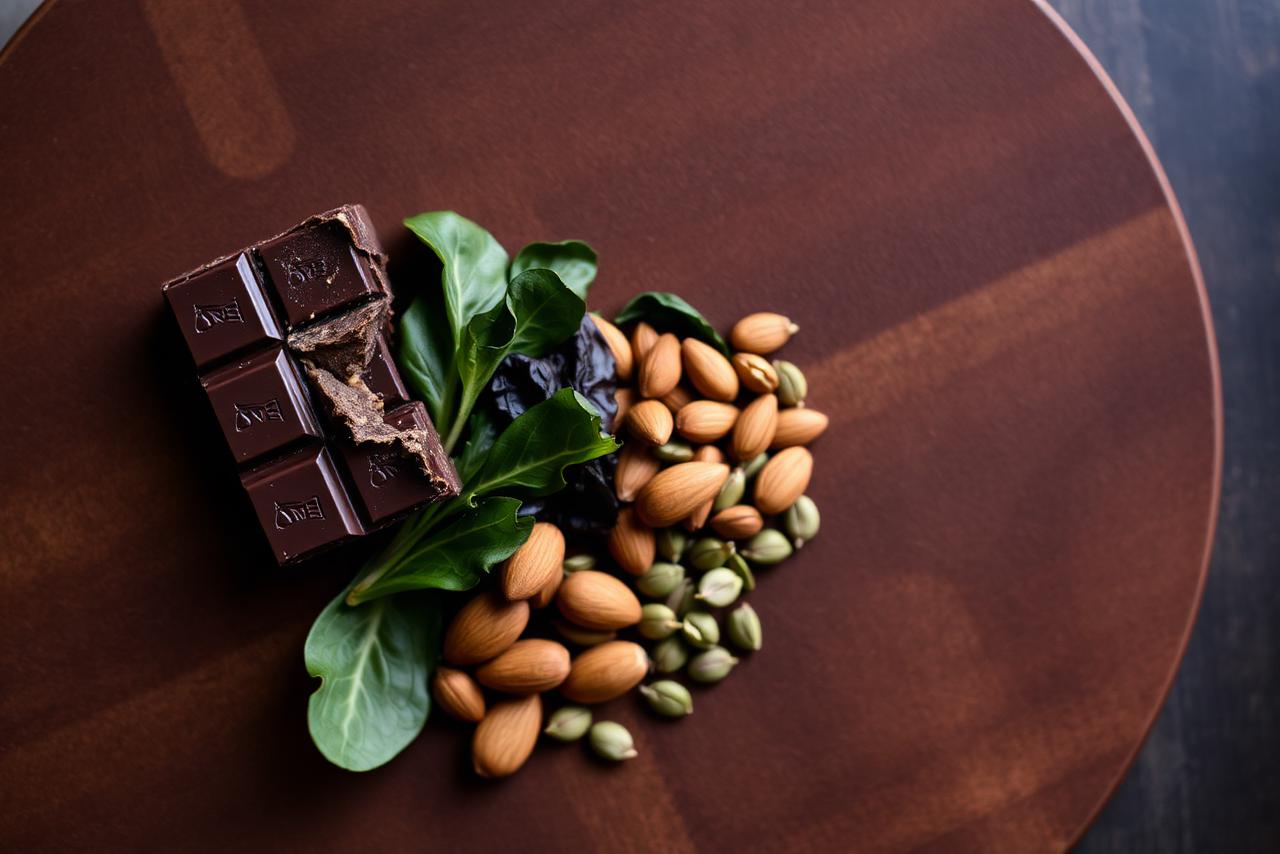
What magnesium does
Magnesium is a cofactor for more than 300 enzymatic reactions. It stabilises the ATP molecule (ATP is always bound to Mg²⁺ in vivo), participates in protein synthesis, glucose metabolism, calcium and potassium transport across membranes, and regulates vascular tone via nitric-oxide and calcium-channel effects. The adult body holds ~25 g of magnesium, most of it in bone; serum magnesium accounts for less than 1% and is a poor status marker — total-body deficits can exist alongside a normal serum value.
Intake references
- IOM RDA: 400 mg/day (men 19–30), 420 mg/day (men 31+); 310 mg/day (women 19–30), 320 mg/day (women 31+).
- EFSA AI: 350 mg/day (men), 300 mg/day (women).
- UL for supplemental magnesium (IOM): 350 mg/day for adults — a threshold for osmotic diarrhoea, not for whole-food intake, which has no established UL.
Sources
| Food | Magnesium (mg) |
|---|---|
| Pumpkin seeds (1 oz) | 150 |
| Spinach, cooked (1 cup) | 155 |
| Black beans, cooked (1 cup) | 120 |
| Chia seeds (1 oz) | 110 |
| Almonds (1 oz) | 80 |
| Quinoa, cooked (1 cup) | 120 |
| Dark chocolate 70% (1 oz) | 65 |
| Avocado (1 cup diced) | 44 |
| Whole-wheat bread (1 slice) | 25 |
Why intake has fallen
Magnesium concentrates in the bran and germ of whole grains — the parts milled out to make refined flour. The shift of the US and European food supply toward refined grains and Group 4 formulations reduces magnesium density per calorie by 60–80% (Cazzola, Nutrients 2020;12:2836). Supplementation is a workaround; whole-food repair is the durable fix.
Cardiometabolic evidence
Fang and colleagues (BMC Medicine 2016;14:210) pooled 40 prospective cohort studies totalling one million participants: the highest tertile of dietary magnesium was associated with a 10% lower all-cause mortality, 30% lower cardiovascular mortality, and 26% lower type-2 diabetes incidence. RCT evidence on supplementation is thinner but consistent for blood pressure (Zhang, Hypertension 2016;68:324–333: −2 mmHg systolic per 240 mg/day supplement).
How NakedCalorie treats magnesium
Magnesium is shown per serving where declared. Because dietary magnesium concentrates in Group 1 foods (nuts, seeds, legumes, whole grains, leafy greens) the NOVA-group signal already tracks it. See potassium and calcium for the co-nutrients relevant to cardiovascular and skeletal outcomes.
Frequently asked questions
- How much magnesium do adults need?
- The IOM RDA is 420 mg/day for men 31+ and 320 mg/day for women 31+ (slightly lower for adults 19–30). EFSA uses adequate intakes of 350 mg/day (men) and 300 mg/day (women).
- Is deficiency really that common?
- NHANES 2013–2016 data show roughly 48% of US adults consume less than the Estimated Average Requirement (Rosanoff, Nutrients 2022;14:2076). Frank clinical hypomagnesaemia is much rarer, but subclinical inadequacy is the norm, especially in adults on chronic proton pump inhibitors, thiazide or loop diuretics, or with poorly controlled type 2 diabetes.
- Does magnesium help sleep or muscle cramps?
- For sleep, RCTs are small and mixed; a 2020 systematic review (Mah & Pitre, BMC Complementary Medicine and Therapies 2021;21:125) found modest improvements in insomnia symptoms in older adults. For nocturnal leg cramps, a Cochrane review (Garrison, 2020) found no benefit over placebo in the general adult population.
- Which form of supplement is best absorbed?
- Citrate, glycinate, malate, and taurate absorb better than oxide (which is cheap but poorly bioavailable and largely acts as a laxative). Doses over 350 mg/day of supplemental magnesium can cause diarrhoea — the IOM UL applies to supplemental intake only.
- Which foods deliver magnesium?
- Pumpkin seeds (~150 mg/oz), chia (~110 mg/oz), almonds (~80 mg/oz), spinach (~155 mg/cup cooked), black beans (~120 mg/cup), whole grains, dark chocolate (~65 mg/oz at 70% cocoa).
Written by NakedCalorie editorial team.
Medically reviewed by Pending registered dietitian review — last reviewed July 15, 2026.
Educational information only, based on peer-reviewed literature and regulatory sources. Not medical advice.
Related in the knowledge base