
Iron
Iron is the essential trace mineral in haemoglobin, myoglobin, and dozens of oxidative enzymes. The IOM RDA is 8 mg/day for adult men and post-menopausal women and 18 mg/day for menstruating women. Iron deficiency remains the most prevalent micronutrient deficiency in the world, affecting an estimated 30% of premenopausal women per the WHO 2023 anaemia report.
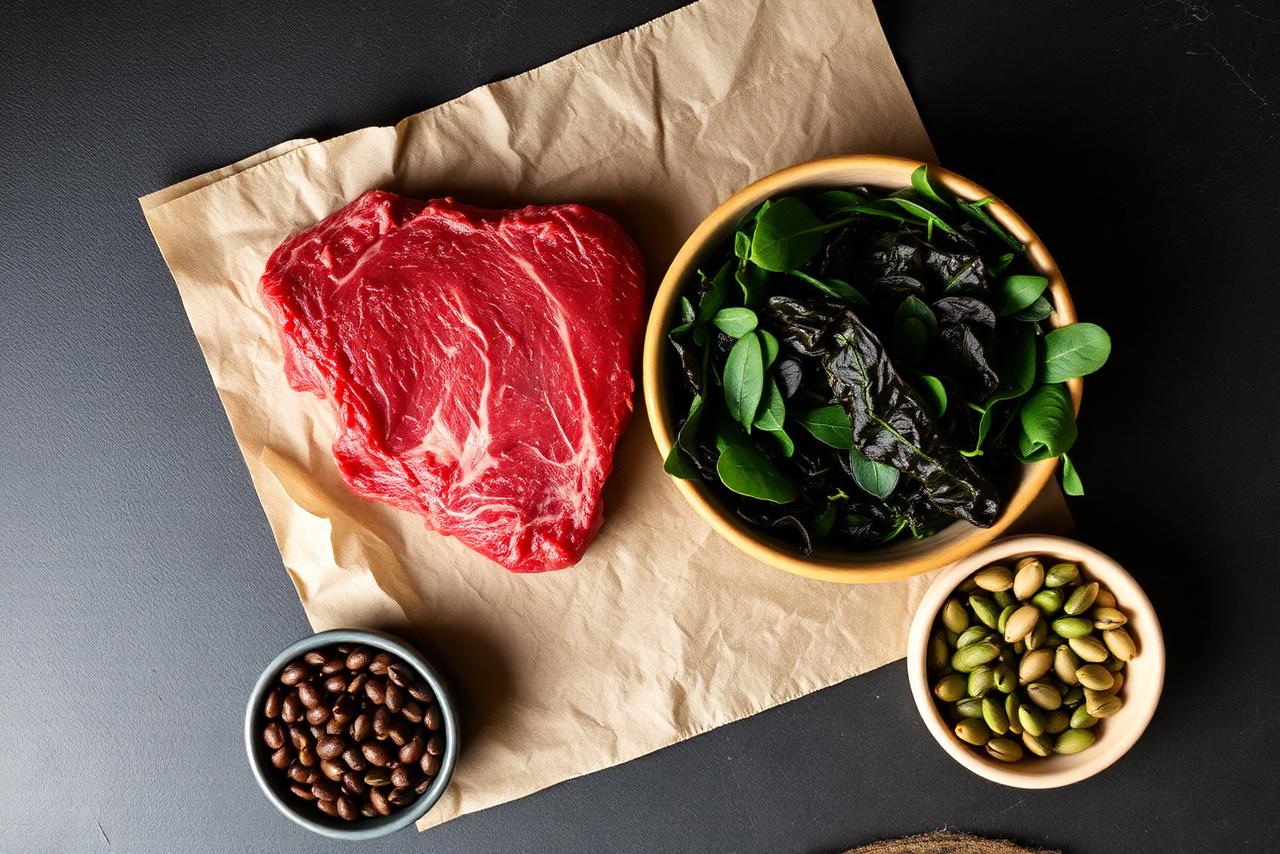
What iron does
Iron sits at the centre of the haem molecule in haemoglobin (oxygen transport) and myoglobin (oxygen storage in muscle). It is also the catalytic centre of cytochromes, catalase, and multiple enzymes in DNA synthesis and the citric-acid cycle. The body holds about 3–4 g of iron in a healthy adult, most of it recycled from senescent red cells; daily losses (menstruation, gut turnover, minor injury) drive the dietary requirement.
Intake references
- IOM RDA: 8 mg/day (adult men, post-menopausal women); 18 mg/day (menstruating women 19–50); 27 mg/day (pregnancy).
- EFSA PRI: 11 mg/day (men), 16 mg/day (menstruating women).
- UL (IOM): 45 mg/day for adults — a threshold for GI upset from supplements, not for whole-food intake.
- Vegetarian adjustment (IOM): multiply RDA by 1.8× to account for lower bioavailability of plant iron.
Heme vs non-heme absorption
| Form | Sources | Typical absorption |
|---|---|---|
| Heme | Red meat, poultry, fish, shellfish, liver | 15–35% |
| Non-heme | Legumes, whole grains, tofu, spinach, nuts, fortified cereals | 2–20% (context dependent) |
Non-heme absorption climbs when the meal includes vitamin C (Cook 2001, +2–3× at 50 mg/meal) or animal protein ("meat factor"); it falls when the meal is high in phytate (unfermented whole grains, some legumes), calcium, or polyphenols (tea, coffee within an hour of eating).
Iron deficiency: scale and consequences
The WHO 2023 Anaemia Report estimates 30% of women aged 15–49 and 40% of children under 5 are anaemic globally; iron deficiency accounts for the largest single share. Even before anaemia develops, iron-deficient adults show reduced aerobic capacity, poorer cognitive performance on attention and working-memory tasks, and lower serum ferritin correlated with fatigue symptoms (Auerbach & Adamson, American Journal of Hematology 2016;91:31–38).
Iron in fortified Group 4 foods
Breakfast cereals, refined-flour bread, pasta, and infant cereals are the main iron-fortified products in North American and European food supplies. Fortification has measurably reduced neural tube defects and childhood anaemia (Bailey, Annual Review of Nutrition2015;35:277–298), which is a rare case where a Group 4 processing choice delivers a population-level nutritional benefit.
How NakedCalorie treats iron
Iron is shown on the nutrient panel where declared, in mg and as % Daily Value (18 mg reference). Fortified iron in a Group 4 food does not lift the food-quality score above what the NOVA group and additive profile earn on their own. See protein for the animal-source iron pathway and vitamin B12 for the sister micronutrient that also concentrates in animal foods.
Frequently asked questions
- How much iron do I need?
- The IOM RDA is 8 mg/day for adult men and post-menopausal women, 18 mg/day for menstruating women, and 27 mg/day during pregnancy. Vegetarians and vegans are advised to target ~1.8× those values because plant iron is less bioavailable.
- What is the difference between heme and non-heme iron?
- Heme iron is bound inside a porphyrin ring in animal haemoglobin and myoglobin (red meat, poultry, fish, seafood). It is absorbed at 15–35% regardless of what else is on the plate. Non-heme iron (legumes, whole grains, spinach, tofu, fortified cereals) is absorbed at 2–20% depending on the other components of the meal.
- What blocks iron absorption?
- Phytate in whole grains and legumes, polyphenols in tea and coffee, calcium in the same meal, and the tannins in red wine all inhibit non-heme iron absorption. Vitamin C in the same meal roughly doubles it (Cook, American Journal of Clinical Nutrition 2001;73:93–98).
- Should I take an iron supplement?
- Only after ferritin and full-blood-count testing confirm deficiency. Supplementing an already iron-replete adult raises oxidative stress and can worsen infections; the WHO restricts routine adult supplementation to defined risk groups. Every-other-day dosing improves absorption vs daily (Stoffel, Lancet Haematology 2020;7:e524–e533).
- How is deficiency diagnosed?
- Ferritin below 30 μg/L in adults is the WHO-recommended threshold for iron deficiency; below 15 μg/L is diagnostic in the absence of inflammation. Anaemia (haemoglobin <120 g/L in women, <130 g/L in men) is a late sign, not the first signal.
Written by NakedCalorie editorial team.
Medically reviewed by Pending registered dietitian review — last reviewed July 15, 2026.
Educational information only, based on peer-reviewed literature and regulatory sources. Not medical advice.
Related in the knowledge base
- MicronutrientsCalcium
- MicronutrientsVitamin B12
- MicronutrientsZinc