
Sodium
Sodium is the essential electrolyte that regulates extracellular fluid volume, blood pressure, and nerve conduction. The IOM sets an Adequate Intake of 1,500 mg/day for adults; the DGA Chronic Disease Risk Reduction (CDRR) intake is below 2,300 mg/day. Global median intake is roughly double the WHO target of 2,000 mg/day.
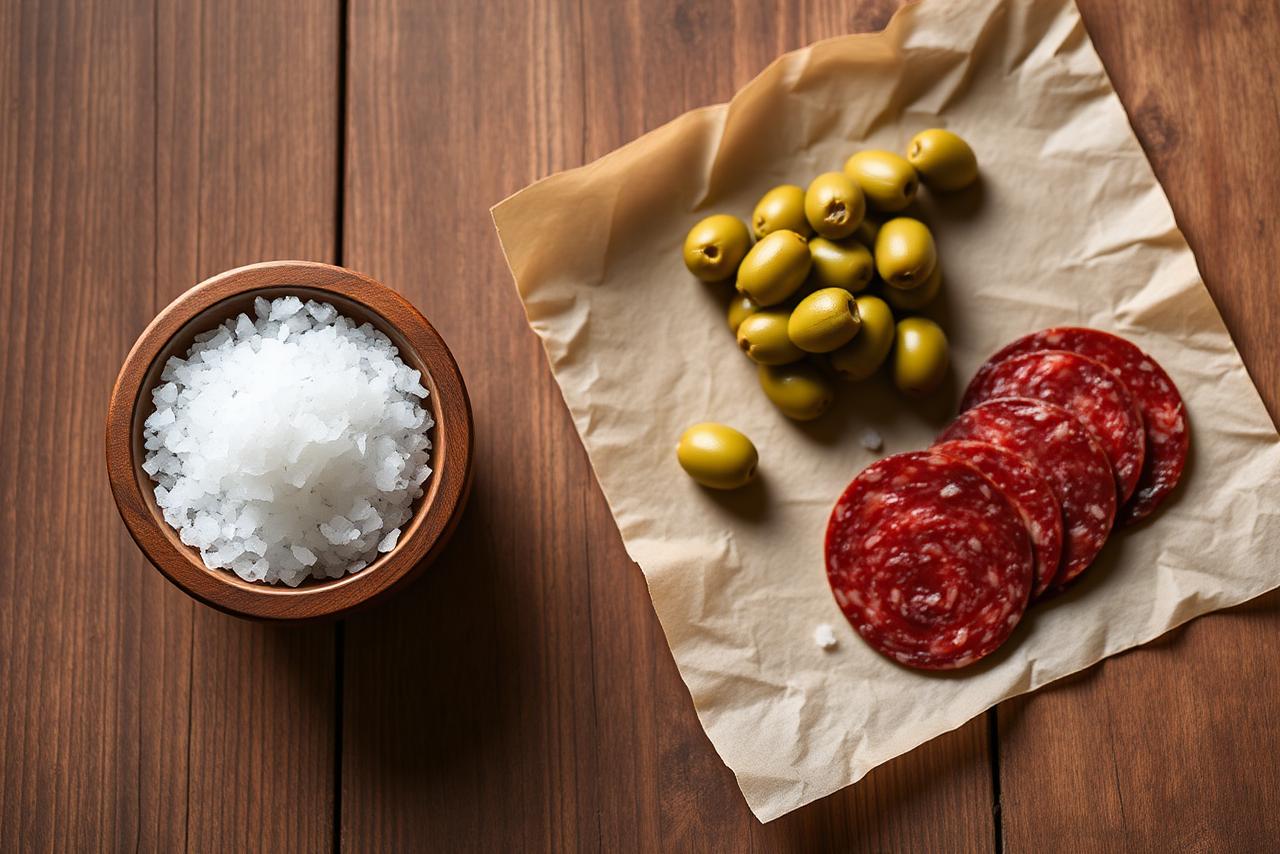
What sodium does in the body
Sodium is the principal cation of extracellular fluid, and the body defends its concentration within tight limits. It regulates plasma volume, muscle and nerve excitability, and the transmembrane gradients that drive nutrient absorption across the intestinal wall and reabsorption in the kidney. Deficiency is essentially never dietary in a modern food supply; excess is the actionable problem.
Intake references
- IOM AI: 1,500 mg/day for adults.
- DGA 2020–2025 CDRR: below 2,300 mg/day for adults.
- WHO: below 2,000 mg/day for adults.
- EFSA: AI 2,000 mg/day; safe and adequate intake.
- Actual US intake (NHANES 2017–2020): mean 3,400 mg/day for adults.
Where sodium comes from
Mattes and Donnelly (Journal of the American College of Nutrition 1991;10:383–393) and successor studies estimate the sources of dietary sodium in Western populations:
| Source | Share of intake |
|---|---|
| Added during commercial processing | ~70% |
| Restaurant / away-from-home | ~10% |
| Naturally present in food | ~15% |
| Added at the table or during home cooking | ~5% |
The top contributors in the US CDC MMWR 2017 analysis were bread and rolls, pizza, sandwiches, cold cuts and cured meats, soups, savoury snacks, chicken products, cheese, and pasta mixed dishes — most sitting in NOVA Groups 3 and 4.
Cardiovascular outcome evidence
The dose–response relationship between sodium and blood pressure is one of the most heavily replicated findings in nutrition (Mozaffarian, NEJM 2014;371:624–634). The remaining debate is about the shape of the curve at the extremes. What settled the practical question is SSaSS (Neal, NEJM 2021;385:1067–1077): a 21,000-participant cluster RCT of a potassium-enriched salt substitute in rural China cut stroke by 14% and cardiovascular mortality by 12%.
Sodium and potassium together
The ratio matters. Higher potassium intake blunts the blood-pressure effect of sodium (Aburto, BMJ 2013;346:f1378), and most modern guidelines now target both nutrients rather than sodium alone. The DASH diet — heavy in fruit, vegetables, low-fat dairy, and whole grains — was designed around that pairing.
How NakedCalorie treats sodium
Sodium is shown per serving in mg and as % Daily Value on the nutrient panel. It contributes to the food-quality score indirectly through the NOVA group; a high-sodium Group 3 processed food (a tinned tomato, an aged cheese) is treated differently from a high-sodium Group 4 formulation. See the Nutrition Facts panel and front-of-pack labels for the label mechanics that make sodium visible at the shelf.
Frequently asked questions
- How much sodium is too much?
- The DGA 2020–2025 sets a Chronic Disease Risk Reduction intake of 2,300 mg/day for adults — the level above which blood pressure begins to rise measurably in most populations. WHO recommends less than 2,000 mg/day. US NHANES data (2017–2020) put mean intake at ~3,400 mg/day, and about 70% of it comes from packaged and restaurant foods, not the salt shaker.
- Does salt reduction actually lower cardiovascular events?
- The SSaSS cluster RCT in China (Neal, NEJM 2021;385:1067–1077) randomised 20,995 participants to a 75% NaCl / 25% KCl salt substitute versus regular salt and reported a 14% reduction in stroke (RR 0.86) and 12% in cardiovascular events. It is the strongest RCT evidence to date that population-level salt reduction changes hard endpoints.
- Is sea salt or Himalayan salt better than table salt?
- Chemically, all three are ~97–99% sodium chloride. The mineral traces differ by micrograms per gram — nowhere near a nutritionally meaningful dose. What table salt uniquely delivers is iodine, added since 1924 in the US and credited by the WHO with global reductions in iodine-deficiency disorders.
- Does everyone respond the same way to sodium?
- No. About 30–50% of adults with hypertension are 'salt-sensitive' — their blood pressure rises more per gram of sodium (Elijovich, Hypertension 2016;68:e7–e46). Older adults, adults of African descent, and adults with pre-existing hypertension or chronic kidney disease show the largest responses.
- How much sodium hides in typical products?
- One cup of canned soup can contain 800–1,200 mg. A single frozen dinner often hits 1,000–1,500 mg. Two slices of deli bread contribute 300–500 mg before anything is added. See how to spot ultra-processed food for the pattern.
Written by NakedCalorie editorial team.
Medically reviewed by Pending registered dietitian review — last reviewed July 15, 2026.
Educational information only, based on peer-reviewed literature and regulatory sources. Not medical advice.
Related in the knowledge base
- MicronutrientsPotassium
- Food labelingThe Nutrition Facts panel (US)
- Food labelingFront-of-pack labels