
Xanthan gum
Xanthan gum is a polysaccharide produced by fermenting sugar with the bacterium Xanthomonas campestris, used as a thickener and stabilizer in salad dressings, gluten-free baked goods, and sauces. It carries E-number E415 and is FDA GRAS with no specified ADI.
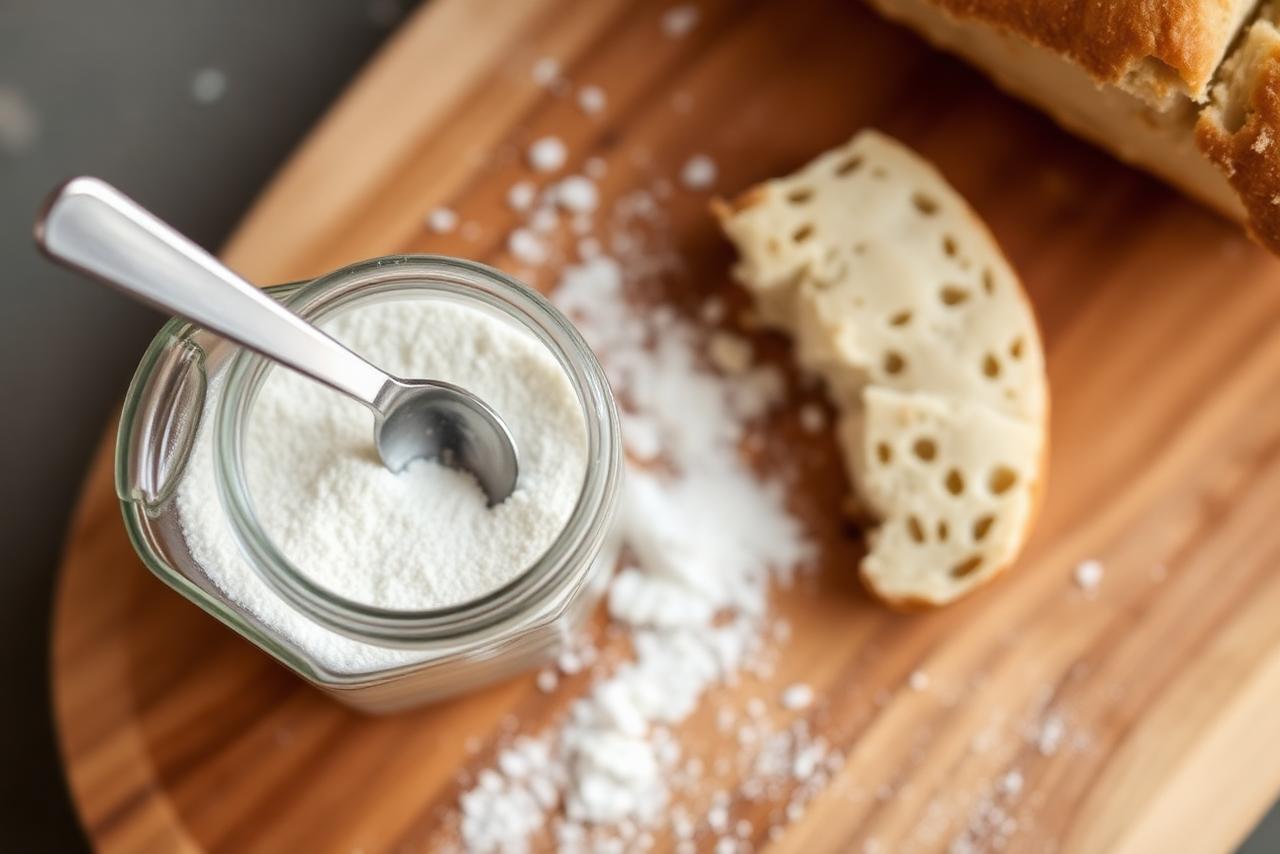
What is xanthan gum?
Xanthan gum is a high-molecular-weight polysaccharide produced by aerobic fermentation of sugar with the plant-pathogenic bacterium Xanthomonas campestris. In water it forms a viscous solution that thickens and stabilises without gelling, which is why it dominates the salad-dressing, sauce, and gluten-free bakery categories.
It carries E-number E415 in the EU and is FDA GRAS under 21 CFR 172.695. JECFA has evaluated it multiple times and has not set a numerical ADI, indicating no safety concern at typical use levels.
How is xanthan gum produced?
- Fermentation. X. campestris is grown on a sugar substrate (glucose or sucrose from corn or cane) in aerobic bioreactors, secreting xanthan into the broth over 3 to 5 days.
- Killing and clarification. The bacteria are pasteurised and the broth is filtered.
- Precipitation. Isopropanol or ethanol precipitates the polysaccharide out of solution.
- Drying and milling. The precipitate is dried, milled to a fine cream-coloured powder, and standardised for viscosity.
Global production sits above 100,000 tonnes annually and is dominated by producers in China, the US, and France. Commodity xanthan sells at $2–4 per kilogram wholesale, cheap enough to appear in almost every category of packaged food.
What foods contain xanthan gum?
- Gluten-free bread, pasta, and baking mixes — replaces the elasticity of gluten.
- Salad dressings and sauces — thickens without changing flavour and prevents oil-water separation.
- Yoghurts, especially low-fat and drinking yoghurts — improves mouthfeel.
- Ice cream and sorbets — controls ice-crystal formation.
- Beverages — suspends pulp in juices, cocoa in chocolate drinks.
- Thickened liquids for dysphagia patients — clinical use to prevent choking.
- Cosmetics, toothpaste, pharmaceuticals — the non-food half of global demand.
- Oil-field drilling fluids — the industrial application xanthan was originally commercialised for in the 1960s.
Is xanthan gum safe?
The regulatory position is that xanthan gum is safe at all typical dietary uses, with no specified ADI. Two operational cautions apply: it should not be given to infants under 12 months, and doses above roughly 15 g/day in adults can cause digestive symptoms.
The infant caution stems from a cluster of necrotising enterocolitis (NEC) cases in premature infants in 2011 who had been given xanthan-thickened formula (branded SimplyThick). The FDA issued a warning against use in premature infants and later against use in any infant under 12 months. The mechanism is thought to be xanthan's fermentation by the immature gut microbiota producing gas and mucosal injury.
In adults, xanthan is a soluble fibre that passes through the small intestine largely undigested and is fermented in the colon. A 1987 controlled study in healthy adults (Daly et al., British Journal of Nutrition) reported that 15 g/day for 10 days softened stools and modestly reduced serum lipids without adverse effects. Higher doses can cause bloating and diarrhoea, consistent with any high-dose fermentable fibre.
A 2022 Nature Microbiology paper (Ostrowski et al.) reported that specific gut bacteria in Western populations have adapted to degrade xanthan — a finding on the microbiome consequences of decades of dietary exposure rather than a safety signal.
How does NakedCalorie flag xanthan gum?
Xanthan gum triggers NOVA Group 4 classification under Monteiro 2019 (any cosmetic thickener classifies a product as ultra-processed) and is treated as a Tier 1 processing signal — surfaced on the scan, counted toward additive load, but not individually flagged as an evidence-linked concern for adults.
The score does apply a specific warning on any product marketed for infant consumption that contains xanthan. For the emulsifier and thickener context, see carrageenan and soy lecithin; for the Group 4 classification rule see Group 4 — ultra-processed foods.
Frequently asked questions
- Can xanthan gum cause digestive issues?
- In sensitive individuals, yes — at doses above roughly 15 g/day it can produce gas and loose stools because it is a fermentable fibre resistant to human digestive enzymes. Typical dietary exposure is under 1 g/day and is well tolerated. It is not safe for infants under 12 months due to a documented link with necrotising enterocolitis (FDA 2011 warning).
- Is xanthan gum gluten-free?
- Yes. It contains no gluten and is the single most common structural additive in gluten-free bread, pasta, and baking mixes because it mimics the elasticity and gas-retention that gluten normally provides.
- Is xanthan gum vegan?
- The base fermentation is vegan (bacterial). Some historical production used lactose or other animal-derived sugars as the fermentation substrate. Modern commodity xanthan is almost always produced on plant-based sugars (glucose, sucrose from corn or cane).
- How much xanthan gum is in a typical serving of food?
- Very little — usually 0.05% to 0.5% by weight of the finished product. A slice of gluten-free bread contains around 200–300 mg. Total dietary intake in a typical Group 4 diet is under 1 g/day, well below the level associated with digestive complaints.
Written by NakedCalorie editorial team.
Medically reviewed by Pending registered dietitian review — last reviewed July 8, 2026.
Educational information only, based on peer-reviewed literature and regulatory sources. Not medical advice.
Related in the knowledge base
- IngredientsCarrageenan
- IngredientsSoy lecithin
- NOVANOVA Group 4 — ultra-processed foods