
Sucralose
Sucralose is a zero-calorie sweetener made by selectively chlorinating three hydroxyl groups on a sucrose molecule, producing a compound roughly 600 times sweeter than sugar and essentially not metabolised by the human body. It carries E-number E955 and is sold under brand names including Splenda.
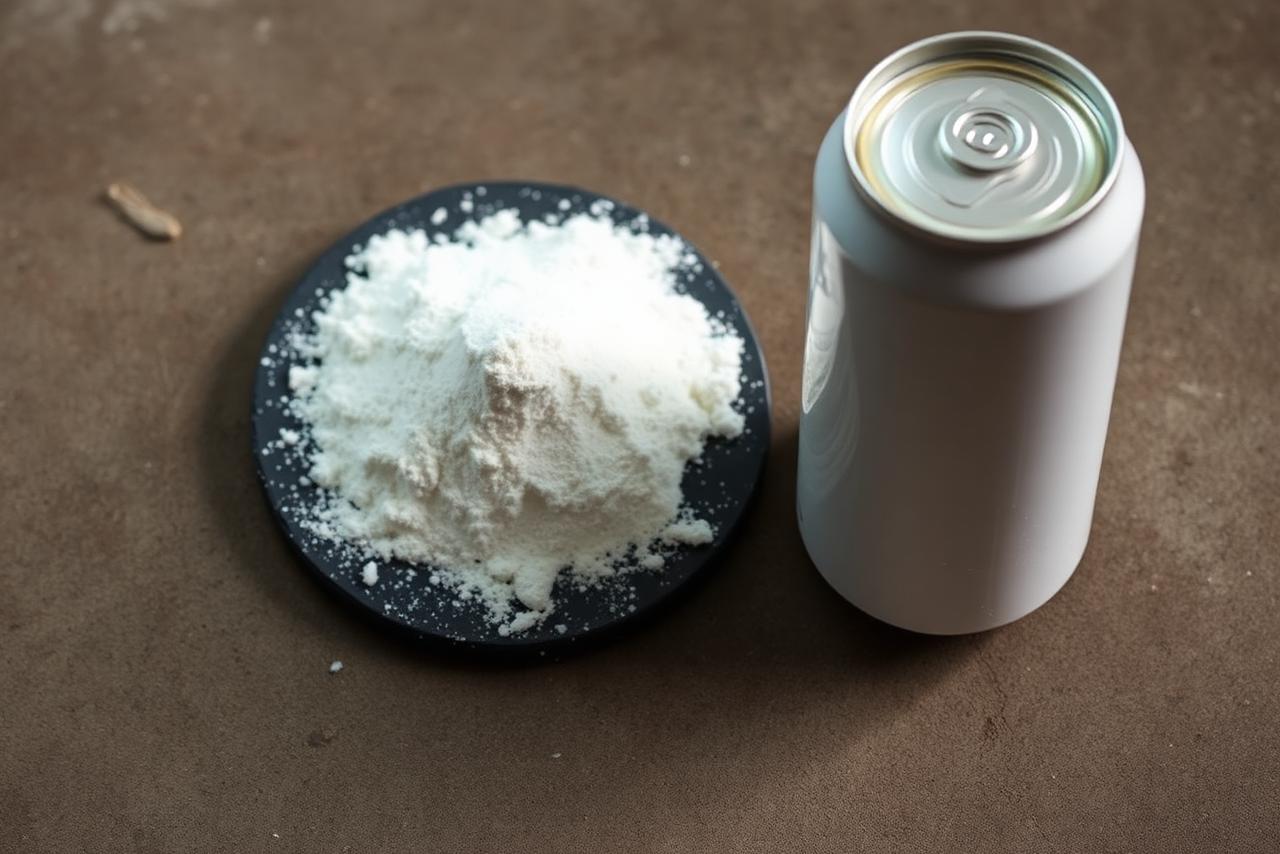
What is sucralose?
Sucralose is a zero-calorie non-sugar sweetener made by selectively replacing three hydroxyl groups on a sucrose molecule with chlorine atoms. The chlorination blocks the enzymes that would normally digest sucrose, so more than 85% of ingested sucralose passes through the digestive tract unchanged and is excreted in the faeces.
Sucralose carries E-number E955 in the EU. It was discovered at Tate & Lyle in 1976, approved by the FDA in 1998 for use in 15 food categories, and expanded to general use in 1999. It is roughly 600 times sweeter than sucrose (per unit mass) and is stable in acidic beverages, making it the dominant non-sugar sweetener in shelf-stable and heat-processed applications.
Where does sucralose appear?
- Diet carbonated soft drinks — the primary sweetener in most zero-sugar sodas since the mid-2010s reformulations.
- Protein powders, bars, and shakes — near-universal in the sports-nutrition category.
- "Sugar-free" and "keto" branded foods — cookies, candies, ice creams.
- Tabletop sweeteners — Splenda packets and granular Splenda.
- Sugar-free syrups — coffee flavourings, pancake syrups.
- Sugar-free chewing gums and mints.
- Pharmaceuticals — sugar-free medications, especially paediatric formulations.
Is sucralose safe according to regulators?
FDA, EFSA, Health Canada, and JECFA have all approved sucralose. The EFSA ADI is 15 mg/kg body weight per day; the FDA ADI is 5 mg/kg body weight per day. The regulatory dossier included animal toxicology, developmental, and carcinogenicity studies, none of which detected effects at doses approaching the ADI.
The gap between the FDA and EFSA ADIs is not a disagreement about the underlying data. It reflects different default safety factors and different intake-modelling assumptions.
What does the human research show on glucose, insulin, and the microbiome?
Two well-designed human studies, published a decade apart, are the reason sucralose is a Tier 2 evidence-linked additive in the encyclopedia rather than a Tier 0 or Tier 1.
Pepino et al. (Diabetes Care, 2013) gave 17 obese, non-diabetic adults either sucralose or water 10 minutes before an oral glucose tolerance test. After sucralose, peak plasma glucose was 14% higher and peak insulin was 20% higher than after water. The mechanism proposed was activation of sweet taste receptors in the gut, priming an anticipatory insulin response to sweetness that then arrived without the expected glucose load.
Suez et al. (Cell, 2022) randomised 120 healthy, non-sweetener-using adults to daily sachets of sucralose, saccharin, aspartame, stevia, or glucose for two weeks. Sucralose and saccharin altered gut microbiome composition and produced measurable increases in glycemic response to a glucose load at day 14. Aspartame and stevia did not. Faecal microbiome transfer from the sucralose and saccharin arms into germ-free mice reproduced the glycemic-response change, providing a mechanistic link.
The 2023 WHO guideline on non-sugar sweeteners, based on a systematic review of 283 studies, recommended against their use for weight control and flagged possible long-term risks of type 2 diabetes and cardiovascular disease. The recommendation applies to sucralose as a member of the class.
Is sucralose a hidden source of maltodextrin?
Yes, in granular Splenda. Granular Splenda is roughly 1% sucralose blended with 99% maltodextrin and dextrose as bulking agents. A one-cup measure delivers about 96 kcal and 32 g of carbohydrate — despite the "0 calories per teaspoon" front-of-pack claim, which is technically true only at the individual-teaspoon serving-size threshold.
This matters for two reasons. The maltodextrin bulking agent has a glycemic index above 85, so granular Splenda used in bulk (baking) delivers glucose the pure sweetener does not. And it means "sugar-free" products sweetened with granular Splenda are not carbohydrate-free — a fact hidden by the serving-size accounting on the label. NakedCalorie parses both the sucralose and the maltodextrin from the ingredient list and shows both.
How does NakedCalorie flag sucralose?
Sucralose is a Tier 2 evidence-linked non-sugar sweetener, surfaced individually on every scan with the Suez 2022 and Pepino 2013 findings and the applicable ADI. Presence of sucralose triggers NOVA Group 4 classification under Monteiro 2019.
The score does not treat sucralose as unsafe but does surface the human-microbiome evidence and the WHO 2023 recommendation. For related non-sugar sweeteners see aspartame; for the bulking-agent question see maltodextrin.
Frequently asked questions
- Does sucralose spike blood glucose?
- On its own, no — sucralose is not metabolised for energy. However Pepino et al. (Diabetes Care 2013;36:2530–2535) showed sucralose taken before an oral glucose tolerance test increased peak glucose and insulin responses in obese individuals. Suez et al. (Cell 2022;185:3307–3328) linked sucralose consumption to glycemic-response changes mediated by gut-microbiome shifts.
- Is sucralose safe to bake with?
- It is heat-stable up to roughly 180 °C (350 °F) in a dry environment, but a 2013 study (Rahn & Yaylayan, Food Chemistry 139) showed that at temperatures above 120 °C in the presence of glycerol or oils it can generate small amounts of chlorinated organic compounds including chloropropanols. This is why some regulators and dietitians advise against high-heat baking with sucralose.
- Is Splenda pure sucralose?
- No. Granular Splenda is roughly 1% sucralose plus 99% maltodextrin and dextrose as bulking agents, so a cup of Splenda contains about 96 calories and 32 grams of carbohydrate — not zero as marketing implies. Liquid Splenda and pure sucralose powder do not contain maltodextrin.
- How much sucralose is safe to consume daily?
- The EFSA ADI is 15 mg/kg body weight per day; the FDA ADI is 5 mg/kg body weight per day. A 355 mL can of Diet Pepsi contains around 18 mg of sucralose — a 70 kg adult would need to drink about 200 cans a day to reach the EFSA ADI.
Written by NakedCalorie editorial team.
Medically reviewed by Pending registered dietitian review — last reviewed July 8, 2026.
Educational information only, based on peer-reviewed literature and regulatory sources. Not medical advice.
Related in the knowledge base
- IngredientsMaltodextrin
- NOVANOVA Group 4 — ultra-processed foods
- SweetenersAspartame