
Monk fruit (mogrosides)
Monk fruit sweetener is the concentrated extract of mogrosides from Siraitia grosvenorii fruit. FDA GRAS since 2010; not yet EFSA-authorised. Mogroside V is the dominant sweetener, 150–250× sweeter than sucrose, essentially calorie-free. Classified NOVA Group 4 as a non-sugar sweetener.
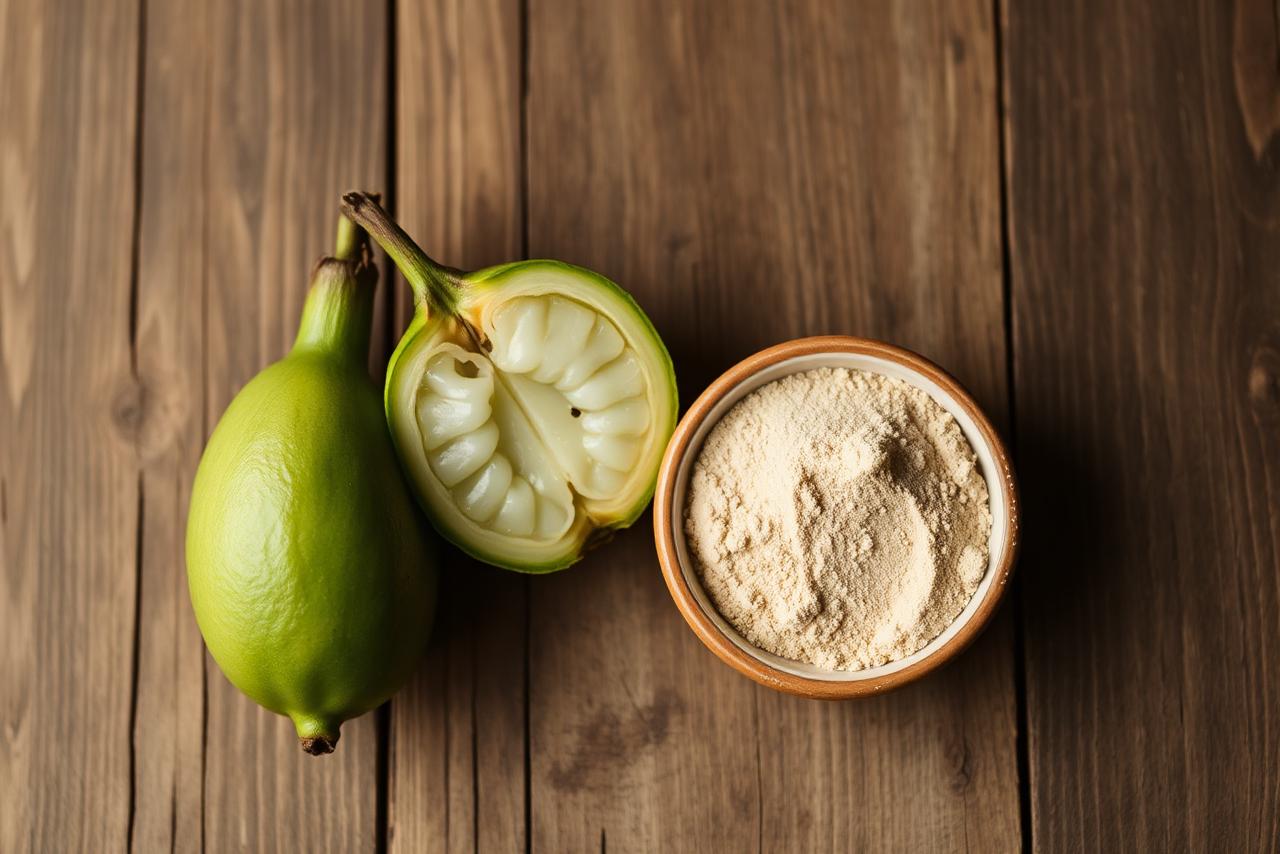
What monk fruit sweetener is
Monk fruit sweetener is the purified extract of mogrosides from Siraitia grosvenorii (luo han guo), a gourd native to southern China. Of the several mogrosides in the fruit, mogroside V is the most abundant sweetener; it is 150–250× sweeter than sucrose and contributes essentially no calories. Commercial production uses hot-water extraction, resin adsorption, ethanol elution, and crystallisation to yield a powder that is typically 25–55% mogroside V.
Regulatory position
- FDA: GRAS notifications accepted since 2010 (GRN 301, 359, 522, and later).
- Health Canada: permitted as a table-top sweetener and food-ingredient.
- EFSA (EU/UK): no novel-food authorisation as of 2026 — monk fruit sweetener cannot legally be sold as a food ingredient.
- JECFA: full evaluation completed 2021; safe at proposed uses.
Metabolism
Like steviol glycosides, mogrosides are hydrolysed by colonic microbiota; the aglycone (mogrol) and its metabolites are absorbed but do not enter glycolysis. Tey and colleagues (2017) reported no differences in postprandial glucose, insulin, GLP-1, or ghrelin after a monk-fruit-sweetened beverage versus water.
Where you'll find it
- Tabletop blends (often 99% erythritol + 1% mogroside V).
- Keto-marketed baked goods, syrups, and ice creams.
- Sports and protein products claiming "no artificial sweeteners".
- Sugar-free chocolate (often paired with allulose or erythritol).
How NakedCalorie flags monk fruit
Monk fruit is a non-sugar sweetener and triggers NOVA Group 4 classification by the Monteiro 2019 rule. The scan surfaces "monk fruit extract" or "mogroside V" as an additive. See stevia for the closest botanical parallel and erythritol for the sugar alcohol it is almost always blended with.
Frequently asked questions
- Is monk fruit approved in the EU?
- Not yet as of 2026. It has FDA GRAS status in the US but no EFSA novel-food authorisation, so it cannot legally be sold as a food ingredient in the EU or UK. Products imported from US brands sometimes reach EU shelves in error.
- What is the ADI?
- The FDA does not set an ADI for GRAS ingredients. Toxicology reviews (Marone, Regulatory Toxicology and Pharmacology 2008;50:194–202) support daily intakes far above expected consumption; no adverse-effect level has been established at doses relevant to food use.
- How does it compare to stevia?
- Both are plant-derived non-sugar sweeteners produced as high-purity extracts. Mogroside V has a cleaner sweet profile with less bitterness than stevioside, but modern rebaudioside M stevia products have closed most of the gap. Both are classified NOVA Group 4.
- Does it raise blood glucose?
- No. Mogrosides are not metabolised for energy; small human trials show no acute effect on glucose or insulin (Tey, International Journal of Obesity 2017;41:450–457).
- Why is it often blended with erythritol?
- Mogroside V is so sweet by weight that tabletop sachets need a bulking agent. Erythritol matches sucrose in volume with near-zero calories and no glycaemic effect, making it the standard carrier for both monk fruit and stevia in retail formats.
Written by NakedCalorie editorial team.
Medically reviewed by Pending registered dietitian review — last reviewed July 15, 2026.
Educational information only, based on peer-reviewed literature and regulatory sources. Not medical advice.
Related in the knowledge base
- SweetenersStevia (steviol glycosides)
- SweetenersAllulose (D-psicose)
- SweetenersErythritol (E968)