
Allulose (D-psicose)
Allulose is a rare monosaccharide with ~70% the sweetness of sucrose, ~10% the calories (~0.4 kcal/g), and negligible glycaemic effect. FDA GRAS since 2012; excluded from Total Sugars and Added Sugars on the US Nutrition Facts panel since 2019. Not yet EFSA-authorised — cannot be sold as food in the EU or UK.
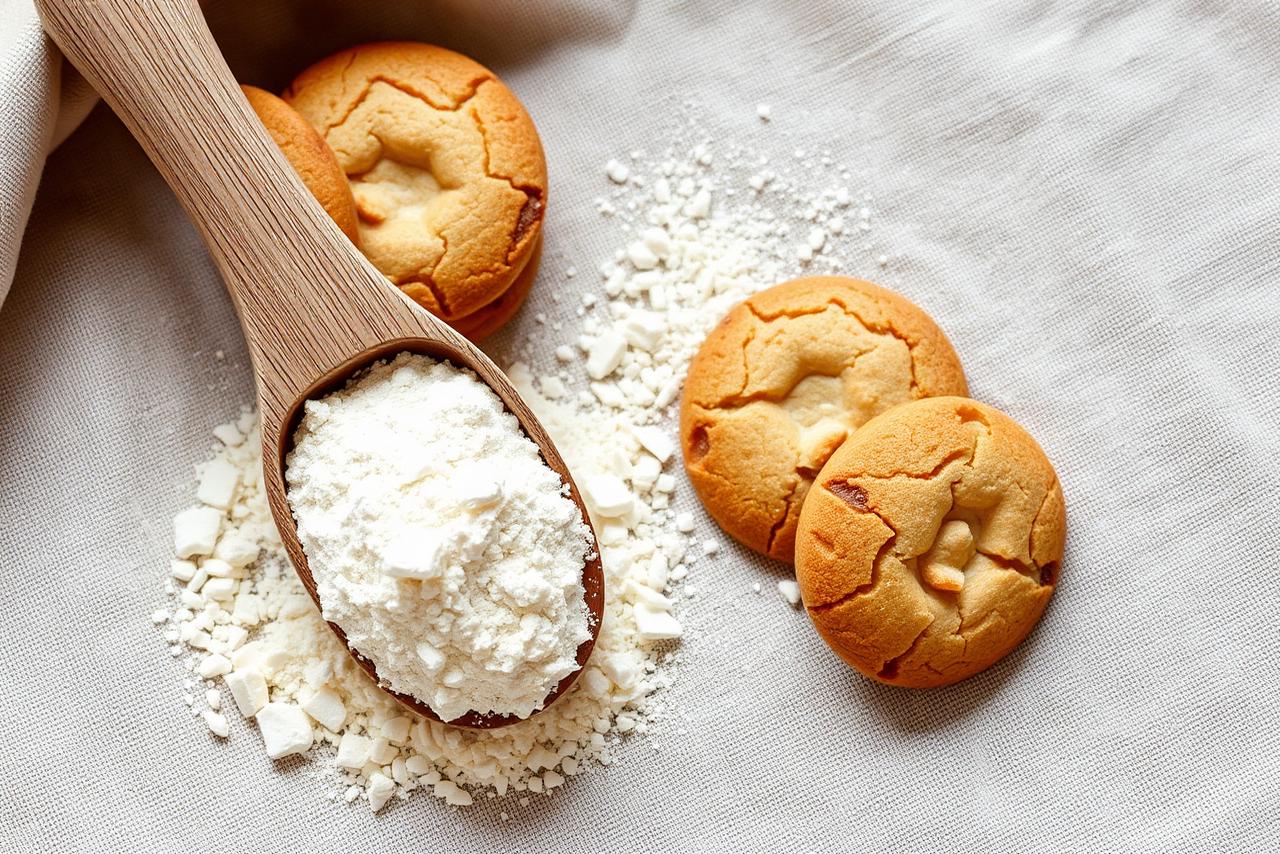
What allulose is
Allulose (D-psicose) is a monosaccharide — the C-3 epimer of fructose — that occurs naturally in trace amounts in figs, raisins, wheat, jackfruit, and molasses. Commercial production uses D-psicose 3-epimerase to convert fructose to allulose, followed by purification and crystallisation. Chemically it is a sugar, but the human body absorbs it without being able to metabolise it — which is why it delivers roughly 0.4 kcal/g instead of fructose's 4.
Regulatory position
- FDA (US): GRAS notifications accepted since 2012. Since April 2019 FDA excludes allulose from Total Sugars and Added Sugars on the Nutrition Facts panel while counting 0.4 kcal/g in the calorie total.
- Health Canada: approved as a novel food.
- EFSA (EU/UK): no novel-food authorisation as of 2026.
- JECFA: full safety evaluation pending.
Metabolism and metabolic effects
Allulose is absorbed by GLUT5 in the small intestine (Iida 2010). Once in circulation it cannot enter glycolysis or fructolysis — the enzymes have poor affinity for the C-3 epimeric form — and roughly 70% is excreted intact in urine, the remainder in faeces via colonic transit. Human RCTs (Han, Nutrients 2018;10:160) report reductions in postprandial glucose when allulose is co-ingested with sucrose or maltodextrin, consistent with slowed intestinal glucose absorption.
Where you'll find it
- Keto-marketed baked goods, syrups, and ice creams.
- Low-sugar chocolate and candy.
- Some US-market protein bars and shakes.
- DIY baking (retail crystalline product).
How NakedCalorie flags allulose
Allulose is a purified monosaccharide produced by enzymatic conversion — it is a NOVA Group 4 sweetener, exactly like isolated fructose or dextrose. The scan surfaces it on the ingredient panel and applies the US label rule (excluded from Added Sugars) where the product is US-market. See erythritol for the closest low-calorie comparator and added sugar for the wider label logic.
Frequently asked questions
- What is allulose?
- Allulose (D-psicose) is a naturally occurring monosaccharide — the C-3 epimer of fructose — found in trace amounts in figs, raisins, wheat, and jackfruit. Commercial allulose is enzymatically converted from fructose using D-psicose 3-epimerase, then crystallised.
- How does it behave in the body?
- It is absorbed in the small intestine but not metabolised for energy; ~70% is excreted intact in urine and the rest in faeces. Postprandial glucose and insulin responses are essentially flat (Iida, Metabolism 2010;59:206–214).
- Is it approved in the EU?
- Not as of 2026. It has FDA GRAS status in the US but no EFSA novel-food authorisation, so it cannot legally be sold as a food ingredient in the EU or UK.
- Does the US label count it as sugar?
- No — since April 2019 the FDA has excluded allulose from Total Sugars and Added Sugars on the Nutrition Facts panel, while allowing 0.4 kcal/g in the calorie count.
- Are there GI side effects?
- Yes, above ~0.5 g/kg body weight per meal (~35 g for a 70 kg adult). Because allulose is minimally metabolised and only partly absorbed, higher doses cause osmotic diarrhoea, similar to sugar alcohols but at a higher threshold.
Written by NakedCalorie editorial team.
Medically reviewed by Pending registered dietitian review — last reviewed July 15, 2026.
Educational information only, based on peer-reviewed literature and regulatory sources. Not medical advice.
Related in the knowledge base
- SweetenersErythritol (E968)
- SweetenersMonk fruit (mogrosides)
- SweetenersSugar alcohols (polyols)