
Erythritol (E968)
Erythritol is a four-carbon sugar alcohol produced commercially by yeast fermentation of glucose. FDA GRAS; EFSA E968. About 70% the sweetness of sucrose, 0.2 kcal/g, and essentially no glycaemic effect. ~90% absorbed in the small intestine and excreted unchanged in urine — hence the exceptional GI tolerance among polyols.
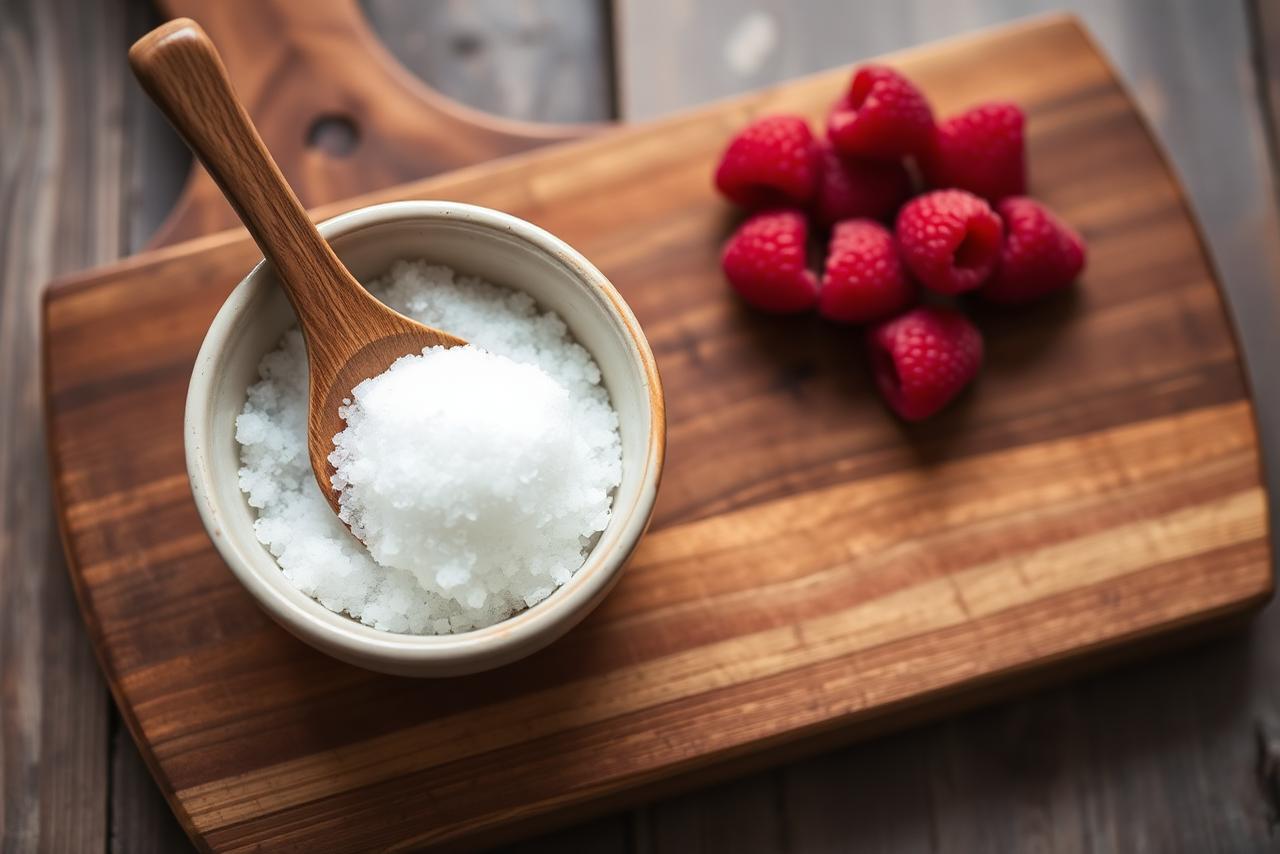
What erythritol is
Erythritol (E968) is a four-carbon sugar alcohol (a polyol) with about 70% the sweetness of sucrose and 0.2 kcal/g — essentially calorie-free at typical dietary use. It occurs naturally at trace levels in pears, watermelon, grapes, and fermented products, but the erythritol used in food is produced by fed-batch fermentation of glucose using osmophilic yeasts, then filtered and crystallised. It is the workhorse bulking agent for tabletop stevia and monk fruit blends, keto baked goods, and no-sugar-added ice creams.
Regulatory position
- FDA: GRAS since 1997.
- EFSA: E968; re-evaluated 2023; safe at proposed uses.
- JECFA: "not specified" ADI, indicating no numerical limit needed.
Absorption and metabolism
Erythritol's small molecular size lets ~90% of an ingested dose absorb passively across the small-intestine wall. Once in circulation, no mammalian enzyme metabolises it — it is excreted unchanged in urine within 24 hours. The remaining 10% reaches the colon, where it is minimally fermentable, which is why erythritol tolerates far larger single doses (~50 g) without diarrhoea than most other polyols.
The Witkowski 2023 cardiovascular signal
Witkowski et al. (Nature Medicine 2023;29:710–718) reported three findings in a single paper:
- Cohort association: higher plasma erythritol was associated with major adverse cardiovascular events in three cohorts totalling more than 4,000 participants.
- Mechanism: physiologic plasma erythritol enhanced platelet aggregation and dense-granule release in vitro; enhanced arterial thrombosis in mouse carotid injury.
- Pharmacokinetic: a single 30 g oral dose of erythritol raised plasma concentration more than 1,000-fold, sustained above thrombosis-relevant levels for 2–3 days.
The main confound is endogenous production: erythritol is a minor product of the pentose phosphate pathway, upregulated by cardiometabolic disease, so elevated plasma levels may reflect (rather than cause) risk. No RCT has yet tested clinical endpoints; regulators have so far not changed the approval status.
How NakedCalorie flags erythritol
Erythritol is a NOVA Group 4 additive. The scan surfaces it on the ingredient panel and, in products where it is the primary sweetener with a large per-serving dose (keto baked goods, ice cream), tags the Witkowski cardiovascular signal for user awareness. See sugar alcohols for the broader polyol family and xylitol for the sister polyol with the same class of cardiovascular signal.
Frequently asked questions
- Is erythritol safe?
- The FDA, EFSA (which re-evaluated it in 2023), and JECFA all classify erythritol as safe at established uses. The 2023 Witkowski Nature Medicine paper reported an observational cardiovascular association and a mechanistic platelet-reactivity signal; regulators reviewed the evidence and did not change approvals, but the signal is on the watch list.
- How does it differ from other polyols?
- Erythritol is small (4 carbons) and ~90% absorbed intact in the small intestine, then excreted unchanged in urine. This is why its GI tolerance is far better than sorbitol or mannitol — most of it never reaches the colon to be fermented.
- Does it raise blood glucose?
- No. Because it is not metabolised for energy, postprandial glucose and insulin responses are essentially unchanged versus water (Noda, European Journal of Clinical Nutrition 1994;48:286–292).
- Is it 'natural'?
- It occurs in small amounts in pears, watermelon, grapes, and fermented foods. Commercial erythritol is produced by fed-batch fermentation of glucose using osmophilic yeasts such as Moniliella pollinis or Yarrowia lipolytica, then crystallised. Regulatory-quality erythritol is chemically identical regardless of source.
- What did the 2023 Witkowski paper show?
- Witkowski et al. (Nature Medicine 2023;29:710–718) reported that plasma erythritol was associated with major adverse cardiovascular events in three independent cohorts, and that erythritol enhanced platelet aggregation and arterial thrombosis in mechanistic assays. Endogenous erythritol production (from the pentose phosphate pathway) may confound the cohort signal. The paper is cohort-plus-mechanism, not RCT — the finding is being followed but has not changed regulatory approval.
Written by NakedCalorie editorial team.
Medically reviewed by Pending registered dietitian review — last reviewed July 15, 2026.
Educational information only, based on peer-reviewed literature and regulatory sources. Not medical advice.
Related in the knowledge base
- SweetenersSugar alcohols (polyols)
- SweetenersXylitol (E967)
- SweetenersAllulose (D-psicose)