
Xylitol (E967)
Xylitol is a five-carbon sugar alcohol matched to sucrose in sweetness at 2.4 kcal/g. FDA GRAS; EFSA E967. Well-documented dental benefit (reduces Streptococcus mutans and caries). Acutely toxic to dogs. A 2024 European Heart Journal cohort-plus-mechanism paper reported a cardiovascular signal parallel to erythritol.
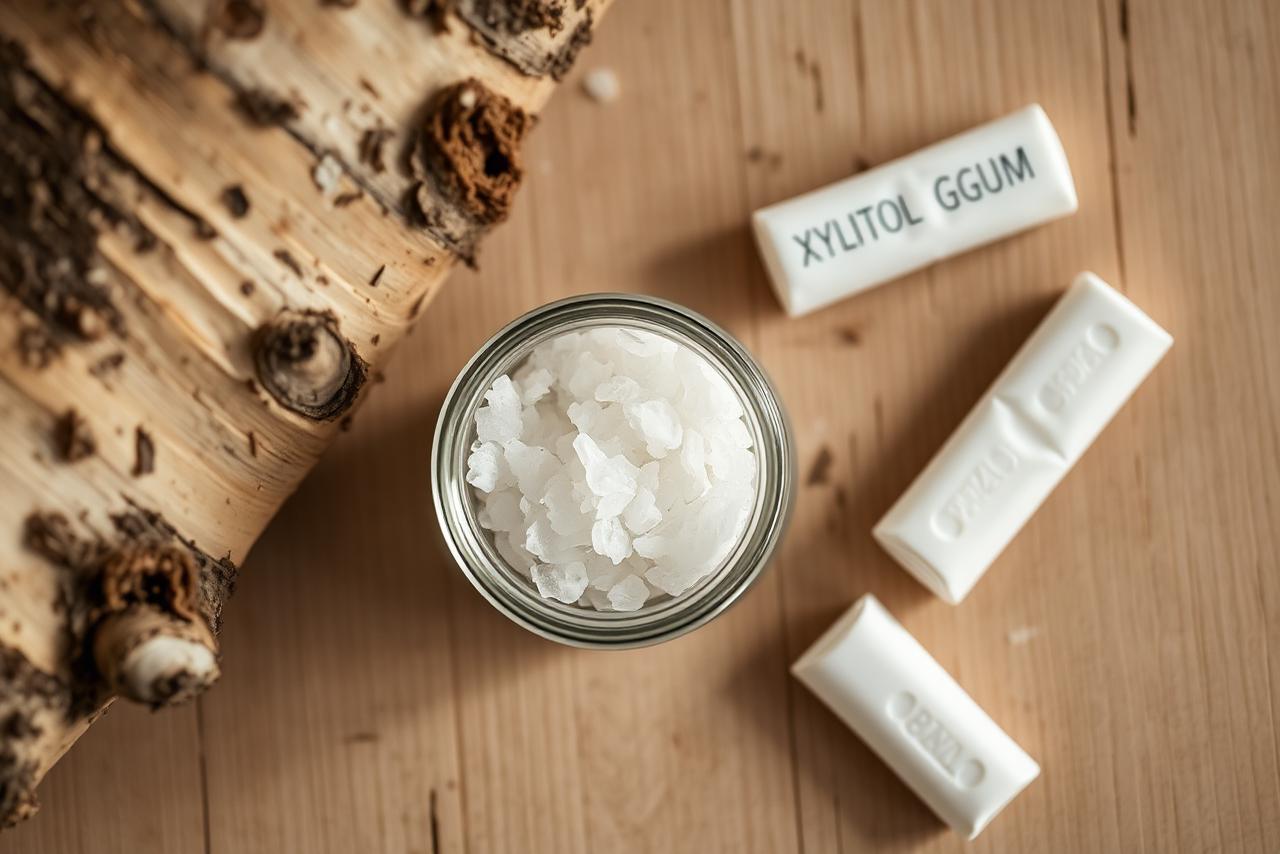
What xylitol is
Xylitol (E967) is a five-carbon sugar alcohol matched to sucrose in sweetness at 2.4 kcal/g. It occurs naturally in trace amounts in many fruits, vegetables, and mushrooms. Commercial xylitol is produced by catalytic hydrogenation of xylose extracted from hardwood, corncobs, or birch — hence the marketing name "birch sugar". Its most established use is in dental-caries prevention.
Regulatory and dental status
- FDA: approved food additive; extensive dental clinical trial base.
- EFSA: E967; approved health claim ("chewing gum sweetened with 100% xylitol contributes to the maintenance of tooth mineralisation").
- WHO: included in the WHO Model List of Essential Medicines for caries-prevention chewing gum programmes.
Where it delivers
- Sugar-free gum and mints (5–10 g/day divided doses reduce caries incidence).
- Sugar-free lozenges and cough drops.
- Toothpastes and mouthwashes.
- Some sugar-free baked goods and jams.
The Witkowski 2024 signal
Witkowski et al. (European Heart Journal 2024;45:2439–2452) replicated the design of their 2023 erythritol paper for xylitol: plasma xylitol was associated with major adverse cardiovascular events in three cohorts, and physiologic plasma xylitol enhanced platelet aggregation and arterial thrombosis in mechanistic assays. A single 30 g oral xylitol dose raised plasma concentration 1,000-fold. As with erythritol, the signal is cohort-plus- mechanism (no RCT for clinical endpoints), endogenous production is a confound, and no regulator has changed approval status.
Danger to dogs
In dogs (but not humans), xylitol triggers rapid insulin release. Doses as low as 0.1 g/kg cause severe hypoglycaemia within 30 minutes; doses above 0.5 g/kg can cause acute hepatocellular failure (Dunayer, Journal of the American Veterinary Medical Association 2004;225:1113–1117). A single stick of xylitol-sweetened gum contains 0.5–1 g. Sugar-free peanut butter, mints, and baked goods sweetened with xylitol must be kept away from dogs.
How NakedCalorie flags xylitol
Xylitol is a NOVA Group 4 additive. The scan surfaces it on the ingredient panel; in dental-format products (gum, mints, lozenges) the WHO/EFSA caries-prevention claim is surfaced alongside the standard UPF tag. See erythritol for the sister polyol with the same cardiovascular-signal profile and sugar alcohols for the class overview.
Frequently asked questions
- Is xylitol safe for humans?
- Yes at typical food-additive doses. The FDA, EFSA (E967), and JECFA all classify it as safe. GI tolerance limits single doses to ~20–30 g in most adults; higher doses cause osmotic diarrhoea.
- Why is it in sugar-free gum?
- Streptococcus mutans, the primary caries-causing oral bacterium, cannot metabolise xylitol — and repeated exposure reduces its adherence to enamel. Milgrom and colleagues (Journal of the American Dental Association 2006;137:190–196) reported measurable caries reduction with 5–10 g/day divided across three chews.
- What is the risk to dogs?
- Dogs, unlike humans, absorb xylitol rapidly and it stimulates a large insulin release, causing severe hypoglycaemia within 30 minutes. Doses above ~0.5 g/kg body weight can cause acute liver failure. Sugar-free gum, peanut butter, and baked goods sweetened with xylitol must be kept away from pets.
- What did the 2024 xylitol paper show?
- Witkowski et al. (European Heart Journal 2024;45:2439–2452) reported a cardiovascular signal parallel to their 2023 erythritol paper: elevated plasma xylitol was associated with major adverse cardiovascular events in >3,000 participants and enhanced platelet reactivity in mechanistic assays. Regulators are watching; no approval change to date.
- Where does it come from?
- Industrial xylitol is produced by catalytic hydrogenation of xylose extracted from hardwood, corncobs, or birch. It occurs naturally in trace amounts in many fruits and vegetables.
Written by NakedCalorie editorial team.
Medically reviewed by Pending registered dietitian review — last reviewed July 15, 2026.
Educational information only, based on peer-reviewed literature and regulatory sources. Not medical advice.
Related in the knowledge base
- SweetenersErythritol (E968)
- SweetenersSugar alcohols (polyols)
- SweetenersAllulose (D-psicose)