
Saturated vs unsaturated fat
Saturated fatty acids raise LDL cholesterol; polyunsaturated fatty acids lower it. Replacing saturated fat with PUFA reduces cardiovascular events 21–29% in pooled RCT data (Hooper 2020 Cochrane; Sacks 2017 AHA). Replacing it with refined carbohydrate does not.
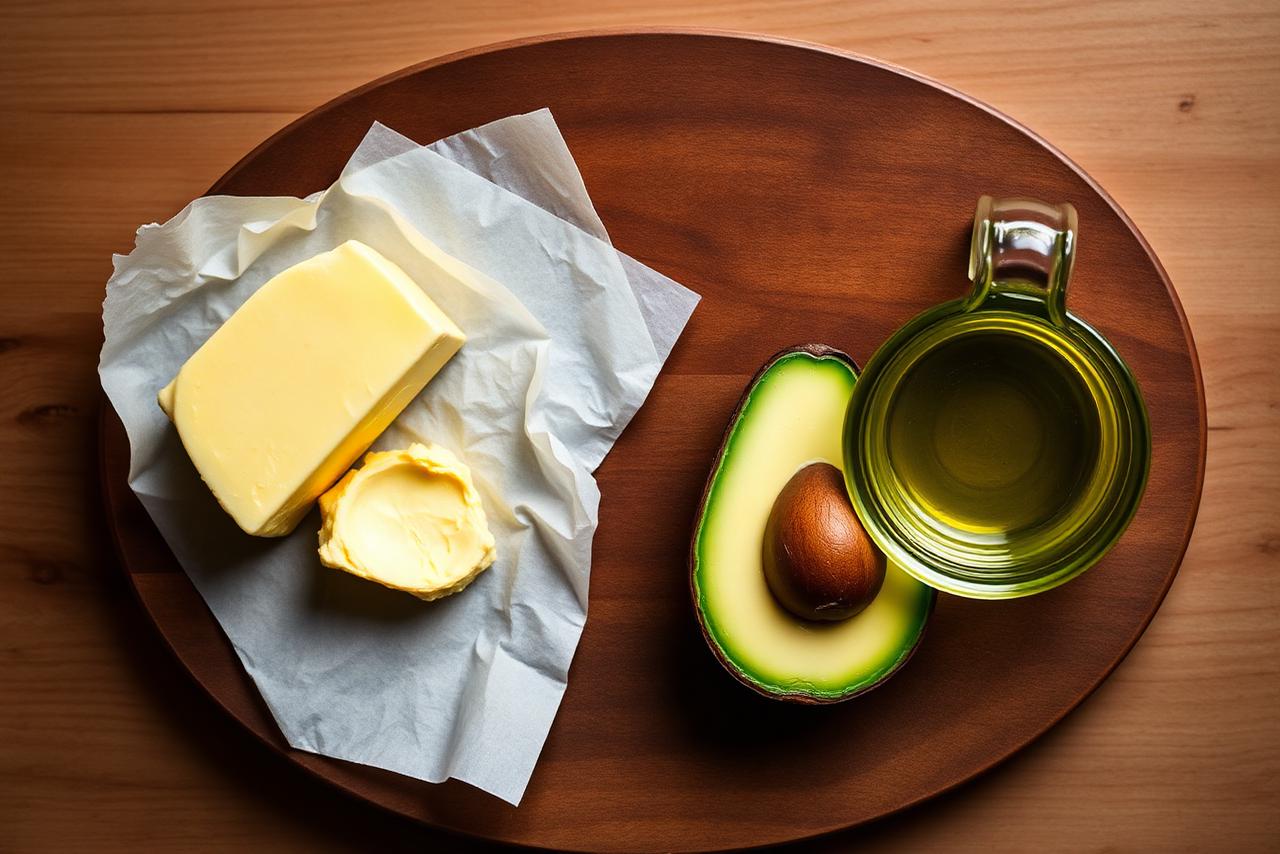
What is the structural difference?
Saturated fatty acids (SFA) have no carbon–carbon double bonds; every carbon is "saturated" with hydrogen. Unsaturated fatty acids have one (monounsaturated, MUFA) or more (polyunsaturated, PUFA) double bonds, which introduce a kink in the chain and lower the melting point. That single geometry difference drives everything else: SFA is solid at room temperature (butter, coconut oil); MUFA is liquid but firms up when refrigerated (olive oil); PUFA stays liquid (sunflower, corn, fish oil).
Effect on blood lipids
Isocaloric exchanges — where SFA is swapped for another macronutrient at equal energy — change LDL cholesterol predictably (Mensink, American Journal of Clinical Nutrition 2003;77:1146–1155):
| Replace 1% of energy from SFA with… | Effect on LDL-C | Effect on HDL-C |
|---|---|---|
| PUFA | −1.8 mg/dL | +0.1 mg/dL |
| MUFA | −1.2 mg/dL | +0.3 mg/dL |
| Carbohydrate (unspecified) | −0.8 mg/dL | −0.4 mg/dL |
Cardiovascular event evidence
Cochrane 2020 (Hooper, Cochrane Database Syst Rev 5:CD011737) pooled 15 randomised trials totalling 59,000 participants. Reducing saturated fat intake by roughly 4% of energy cut cardiovascular events by 21% (RR 0.79, 95% CI 0.66–0.93). The effect required an actual swap — mostly to PUFA. Trials that reduced SFA without a defined replacement showed no benefit.
The AHA presidential advisory (Sacks, Circulation 2017;136:e1–e23) put the effect in the same range as first-line statin therapy for LDL reduction at the population level. Astrup and colleagues (Journal of the American College of Cardiology 2020;76:844–857) argued for source-level nuance — dairy fat behaves differently to meat fat behaviourally in cohort data — but did not overturn the isocaloric-exchange evidence.
Where they appear in the food supply
- Saturated: butter, cheese, fatty red meat, poultry skin, coconut and palm oil, most bakery, most Group 4 snacks.
- Monounsaturated: olive oil, avocado, almonds, hazelnuts, canola.
- Polyunsaturated (omega-6): sunflower, safflower, soybean, corn oil; most seed oils.
- Polyunsaturated (omega-3): salmon, sardines, mackerel, flax, chia, walnuts, algae — see omega-3 vs omega-6.
How NakedCalorie treats the SFA/UFA balance
The nutrient panel shows both saturated fat grams and total fat grams. Neither drives the food-quality score directly. The score responds to structural ingredients — hydrogenated oils, palm oil, refined seed oils used as filler — and to the NOVA group. Read trans fat for the one fat class where the evidence is near-absolute, and dietary fats for the parent overview.
Frequently asked questions
- Is saturated fat 'bad'?
- Not by itself — it is a structural class of nutrient, not a verdict. What is well supported by RCTs is that replacing dietary saturated fat with polyunsaturated fat lowers cardiovascular events; replacing it with refined starch does not. Ask what the alternative is, not whether the fat is 'good' or 'bad'.
- Doesn't the Mente / Lancet 2017 paper show SFA is fine?
- It reported no association between total saturated fat intake and mortality in the PURE cohort. That is consistent with the RCT literature: total SFA % is a weak signal without specifying the replacement. The Cochrane 2020 pooled RCT evidence remains the highest-tier answer, and it favours the SFA→PUFA swap.
- Which oils are highest in unsaturated fat?
- Extra-virgin olive oil is ~73% monounsaturated. Sunflower, safflower, corn, and soybean oils are 50–70% polyunsaturated (mostly linoleic acid). Canola sits between, with a favourable omega-3 content.
- Is butter or margarine better?
- Modern soft-tub margarines with no partial-hydrogenation and no palm oil are lower in SFA and iTFA than butter; older stick margarines built on partially hydrogenated oil are strictly worse than butter. The name on the tub matters less than the ingredient list.
- Should adults with high LDL cut saturated fat further?
- Yes. The AHA (Sacks 2017) recommends <6% of calories from SFA for adults with elevated LDL, based on 5–10 mg/dL LDL reductions per 1% energy exchange with PUFA — clinically meaningful when compounded over years.
Written by NakedCalorie editorial team.
Medically reviewed by Pending registered dietitian review — last reviewed July 15, 2026.
Educational information only, based on peer-reviewed literature and regulatory sources. Not medical advice.
Related in the knowledge base
- MacronutrientsDietary fats
- MacronutrientsTrans fat
- MacronutrientsOmega-3 vs omega-6