
Palm oil
Palm oil is a semi-solid edible oil extracted from the fruit of the African oil palm (Elaeis guineensis). It is the most-consumed vegetable oil in the world, the default trans-fat replacement in industrial baking, roughly 50% saturated fat, and central to a well-documented tropical-deforestation problem in Indonesia and Malaysia.
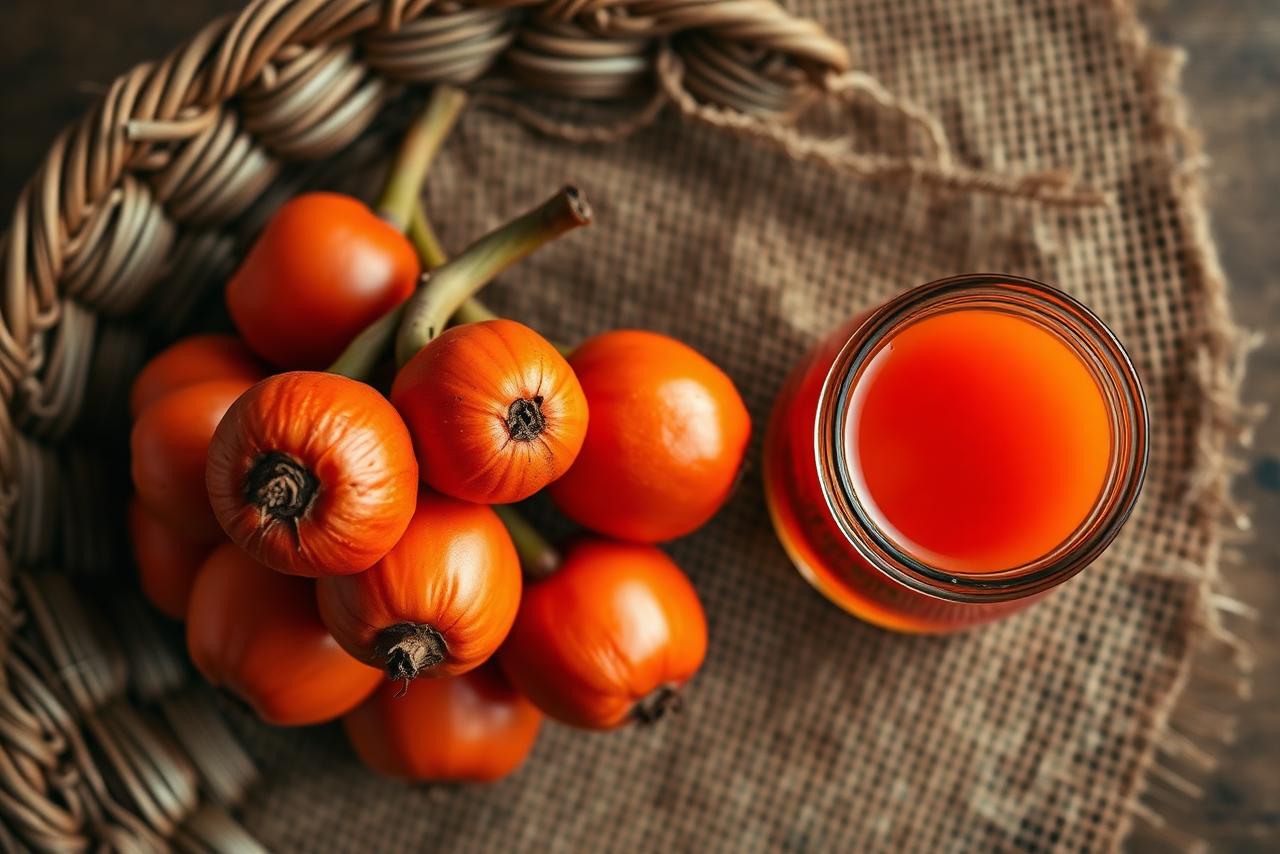
What is palm oil?
Palm oil is the edible oil pressed from the fruit of the African oil palm, Elaeis guineensis. It is semi-solid at room temperature, roughly 50% saturated fat (mostly palmitic acid), 40% monounsaturated (oleic acid), and 10% polyunsaturated (linoleic acid). Palm kernel oil — from the seed rather than the fruit — is a distinct product, higher in saturated fat (~82%).
Palm oil is now the most-consumed vegetable oil globally, ahead of soybean, rapeseed, and sunflower. Roughly 85% of world production comes from Indonesia and Malaysia. Its dominance in industrial baking dates to the 2003 Danish trans-fat ban, which created an urgent need for a semi-solid, cheap, trans-fat-free replacement.
Where you find it
- Industrial baked goods — biscuits, croissants, doughnuts, cakes.
- Chocolate spreads and confectionery — including Nutella, most commercial chocolate.
- Instant noodles and ramen fried packets.
- Margarines and spreads.
- Frozen ready meals and pastry cases.
- Ice cream (for structural fat).
- Non-food uses — soap, cosmetics, biodiesel — outside this article's scope.
On ingredient lists it appears as "palm oil", "palm fat", "palm olein", "palm stearin", "hydrogenated palm oil", "palm kernel oil", "vegetable oil (palm)", or under one of ~200 derivative names (glyceryl palmitate, sodium palmitate).
Health evidence
The evidence on palm oil is nuanced:
- Compared to trans fats: substantially safer. Replacing trans fats with palm oil reduces cardiovascular risk.
- Compared to butter or coconut oil: roughly equivalent on lipid profile.
- Compared to unsaturated oils (olive, rapeseed, sunflower): palm oil raises LDL cholesterol. The Cochrane 2020 review estimated an approximate 0.24 mmol/L LDL increase when saturated fat replaces polyunsaturated fat at 5% of energy.
The WHO 2023 guideline on saturated fatty acid intake recommends keeping saturated fat below 10% of daily energy — for an adult on 2,000 kcal, roughly 22 g/day. A single palm-oil-heavy pastry can account for a third of that limit.
Environmental context
Palm oil cultivation is the largest single driver of tropical rainforest loss in Southeast Asia over the past three decades. The 2022 Curtis et al. analysis in Global Environmental Change attributed roughly 5% of global tropical deforestation to palm oil directly. RSPO certification exists but covers a minority of production. NakedCalorie surfaces palm-oil presence but does not currently distinguish RSPO-certified from conventional.
How NakedCalorie flags palm oil
Palm oil is a Tier 2 marker in the ingredient encyclopedia — a NOVA Group 4 signal when combined with industrial reformulation context, and always surfaced with the saturated-fat contribution per serving. See hydrogenated oils for the trans-fat context, seed oils for the alternative debate, and the scoring methodology for how it feeds the final score.
Frequently asked questions
- Is palm oil bad for you?
- Palm oil is roughly 50% saturated fat, mostly palmitic acid. Systematic reviews (Sun et al., 2015; Kabagambe et al., 2018) find it raises LDL cholesterol compared with unsaturated oils but is neutral or slightly better compared with butter. It is not banned and is not classed as a health risk by any major regulator, but the WHO 2023 saturated-fat guideline recommends keeping saturated fat below 10% of total energy.
- Why is palm oil in so many products?
- It is semi-solid at room temperature (like butter or hydrogenated oils), the highest-yielding oil crop per hectare, and inexpensive. After the trans-fat bans of 2015–2021, most industrial bakers switched from partially hydrogenated soybean oil to palm oil.
- What is 'sustainable palm oil'?
- The Roundtable on Sustainable Palm Oil (RSPO) certifies palm oil produced under standards intended to limit deforestation and protect labour rights. As of 2024 roughly 20% of global palm oil is RSPO-certified. Certified sustainable palm oil is not the same as palm-oil-free.
Written by NakedCalorie editorial team.
Medically reviewed by Pending registered dietitian review — last reviewed July 15, 2026.
Educational information only, based on peer-reviewed literature and regulatory sources. Not medical advice.
Related in the knowledge base