
NOVA Group 2 — processed culinary ingredients
NOVA Group 2 covers substances extracted from Group 1 foods or from nature by pressing, refining, grinding, or drying — salt, sugar, oil, butter, vinegar, honey — used to season and cook Group 1 foods. They are the pantry, not the meal, and the Brazilian Dietary Guidelines recommend using them in moderation.
What is NOVA Group 2?
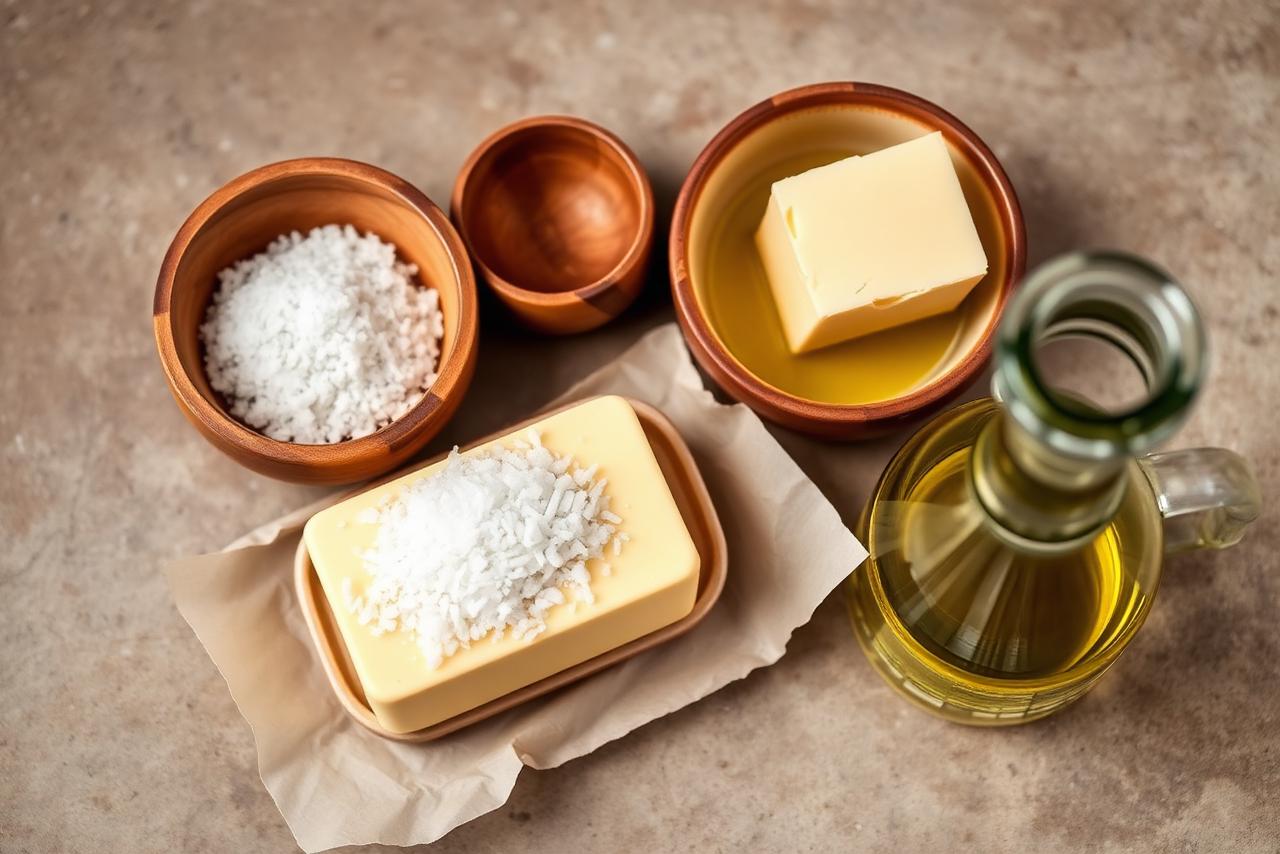
NOVA Group 2 covers substances extracted from Group 1 foods or directly from nature by pressing, refining, grinding, milling, or drying, used to season and cook Group 1 foods and turn them into meals. They are the pantry, not the meal. Group 2 ingredients rarely make up a dish on their own; their role is to enhance Group 1 foods.
The Monteiro 2016 framework treats Group 2 as culturally essential — no cuisine in human history operates without salt, oil, or a sweetener — while insisting that the group carries a moderation caveat. Consuming Group 2 substances in large quantities, or extracting most of a day's calories from them, moves a diet away from the pattern the guidelines support.
What ingredients count as Group 2?
- Salt — mined rock salt, sea salt, evaporated brine.
- Sugars — refined white sugar, brown sugar, muscovado, turbinado, molasses, cane syrup.
- Vegetable oils — olive, sunflower, canola, soybean, corn, palm, coconut, sesame.
- Animal fats — butter, ghee, lard, tallow, schmaltz, fish oil.
- Honey and maple syrup — extracted from combs or tree sap.
- Vinegars — wine, cider, rice, malt, balsamic (traditional); produced by acetic fermentation.
- Starches — corn starch, potato starch, arrowroot — as long as they are single-ingredient and not modified.
- Ground spices when used as a base ingredient (turmeric powder in curry, paprika in chorizo) rather than as a whole spice.
The single unifying rule is that each item is a single substance extracted from a Group 1 food or from nature. A Group 2 ingredient combined with additives (e.g. iodised salt with anti-caking agent, brown sugar with molasses added back) is still Group 2 — the additives are technical and do not push it into Group 4.
Which processes are used to make Group 2 ingredients?
The permitted Group 2 processes, from Monteiro et al. (2019), are pressing, centrifuging, refining, extracting, milling, drying, and acetic fermentation. All have long culinary histories.
- Pressing — olives to oil, sesame seeds to oil, sugar cane to juice.
- Refining — cane juice to crystalline sucrose; crude soybean oil to bottled cooking oil.
- Extraction — beet sugar from beetroot slurry; salt from evaporated seawater.
- Centrifuging — cream from milk, then churning to butter.
- Milling and grinding — cocoa beans to cocoa mass; wheat to flour (though flour then becomes a Group 1 or Group 3 base depending on use).
- Acetic fermentation — wine or cider to vinegar via Acetobacter.
How is Group 2 different from Group 4?
Group 2 ingredients are single substances extracted from foods. Group 4 products are recombinations of multiple Group 2-adjacent substances (refined oils, refined sugars, isolated proteins, modified starches) plus cosmetic additives, packaged for direct consumption.
Sugar is Group 2; a soft drink built from sugar plus water plus caramel colour plus phosphoric acid plus flavour is Group 4. Refined sunflower oil is Group 2; a margarine built from refined sunflower oil plus emulsifiers plus flavourings plus colours is Group 4. The Group 2 item exists in the pantry; the Group 4 item exists on the retail shelf ready to eat.
Are Group 2 ingredients healthy?
Individually they can be, in the amounts a home kitchen uses. In total dietary intake terms, they are the class most cleanly linked to excess calorie consumption when they escape their culinary role.
Salt intake above the WHO recommendation (5 g/day) is associated with higher blood pressure and cardiovascular events in every long-running cohort that has looked (INTERSALT 1988, PURE 2014). Added-sugar intake above 10% of daily calories is linked to weight gain, dental caries, and higher triglycerides (WHO 2015 sugars guideline). Refined seed-oil intake at the volumes typical of Group 4 diets exceeds the AI for linoleic acid several-fold.
None of this makes Group 2 ingredients bad. It makes their volume the variable that matters. A Mediterranean diet is heavy in olive oil (Group 2) and moderate in salt (Group 2) and produces some of the best cardiometabolic outcomes in the epidemiological literature. The same volume of Group 2 fat and salt embedded in Group 4 products behaves differently.
How does NakedCalorie score Group 2 items?
Group 2 ingredients score high on the processing axis (they are not ultra-processed) but their calorie and macronutrient density is surfaced clearly in the diary. A tablespoon of olive oil (120 kcal, 14 g fat) is scored as high-quality on processing and logged accurately on calories. NakedCalorie does not warn about Group 2 items unless the daily intake pattern shifts calories heavily toward them without a matched Group 1 base.
For the boundary below Group 2, see Group 1 — unprocessed and minimally processed foods. For the boundary above, see Group 3 — processed foods and Group 4 — ultra-processed foods.
Frequently asked questions
- Is olive oil Group 2 or Group 4?
- Extra virgin olive oil is Group 2. It is extracted from olives by pressing alone. Highly refined oils that have been degummed, bleached, and deodorised — like refined sunflower or soybean oil — are still Group 2 in the NOVA framework because they are single-ingredient extracted substances, though the Brazilian guidelines advise preferring cold-pressed varieties.
- Is honey Group 1 or Group 2?
- Honey is Group 2. Even though it is minimally processed (extracted from combs, filtered, sometimes gently warmed), Monteiro et al. classify it as an extracted culinary ingredient used to sweeten foods, not as a whole food eaten in bulk.
- Should I avoid all Group 2 ingredients?
- No. The Brazilian Dietary Guidelines describe Group 2 ingredients as culturally essential — every cuisine on earth uses them — and recommend using them in moderation to season and cook Group 1 foods. What they warn against is consuming Group 2 ingredients in large amounts on their own, or as the base of Group 4 formulations.
Written by NakedCalorie editorial team.
Medically reviewed by Pending registered dietitian review — last reviewed July 8, 2026.
Educational information only, based on peer-reviewed literature and regulatory sources. Not medical advice.
Related in the knowledge base