
Protein isolates (whey, soy, pea)
Protein isolates are industrial ingredients produced by stripping fat, carbohydrate, and minor components out of a whole protein source, leaving 85–95% pure protein powder. Whey, soy, casein, and pea isolates are the four most common. They are not used in home kitchens, are the defining ingredient in most high-protein packaged foods, and classify a product as NOVA Group 4.
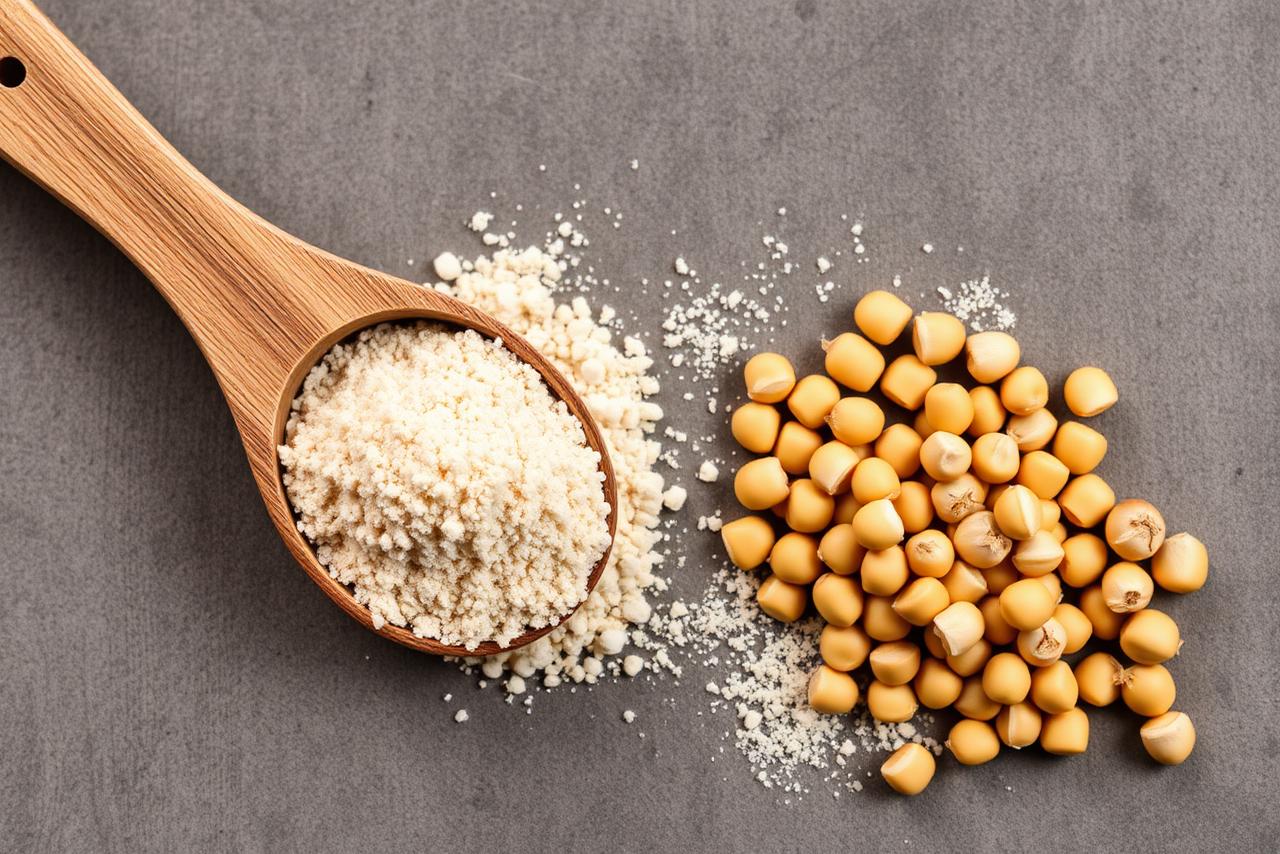
What is a protein isolate?
A protein isolate is an ingredient produced by industrial separation of protein from its original food matrix. The starting material (milk, soybean, pea, egg, rice) is processed through some combination of pH shifting, ultrafiltration, ion-exchange chromatography, and spray-drying to leave a powder that is 85–95% pure protein by dry weight, with fat, carbohydrate, and minor components stripped away.
Concentrates are the less-purified sibling (70–85% protein). Hydrolysates go one step further and pre-digest the isolated protein into shorter peptides. All three are industrial ingredients under NOVA Monteiro 2019 and trigger Group 4.
The four common isolates
- Whey protein isolate — from milk. High-quality amino acid profile, dominant in sports supplements.
- Soy protein isolate — from defatted soybean meal. Common in meat alternatives, protein bars, infant formula.
- Pea protein isolate — from yellow pea. Growing use in plant-based meat and dairy alternatives.
- Casein — the slow-digesting milk protein, used in some sports products and processed cheese.
Also common: rice, hemp, egg white, collagen peptides, and various blends.
Where they appear
- Protein powders and ready-to-drink shakes.
- Protein bars, cookies, chips, and cereals.
- Meat alternatives — most plant-based burgers, sausages, nuggets.
- Yoghurts, ice creams, and puddings marketed as "high protein".
- Infant and toddler formulas.
- Coffee whiteners and creamers.
Are they harmful?
The direct evidence on isolated proteins is largely reassuring:
- Whey protein supplementation has been studied in hundreds of randomised trials for muscle synthesis, glucose control, and blood pressure with generally favourable or neutral effects.
- Soy protein isolate has been analysed for endocrine effects and cardiovascular outcomes; large reviews (Messina 2022) find no adverse endocrine effects at usual intakes.
- Pea protein isolate has a smaller evidence base but no signals of harm.
NOVA is not about direct harm from the isolate. The framework's argument is that a food built around isolates is by construction an industrial formulation, and industrial formulations correlate with worse dietary patterns and health outcomes in the cohort literature. That is why isolates trigger Group 4 even though the isolate itself is not the risk factor.
How NakedCalorie flags them
Any protein isolate, concentrate, or hydrolysate on an ingredient list moves the product to Group 4 in the score. The app also surfaces the total protein per serving from the nutrition panel — so users targeting protein goals can see both the amount and the industrial provenance. For related industrial ingredients see maltodextrin and soy lecithin; for the framework logic see ultra-processed foods.
Frequently asked questions
- Is whey protein bad for you?
- No — whey protein is well-tolerated, is one of the most-studied nutritional supplements, and has a favourable amino acid profile. What makes it a Group 4 marker in NOVA is not toxicity but industrial provenance: it does not exist in a kitchen, only in a factory. The health question is separate from the classification.
- Why do protein bars still classify as ultra-processed?
- Because a protein bar is not a whole food that happens to be high in protein — it is an industrial formulation of protein isolate, emulsifier, non-sugar sweetener, humectant, and cocoa or flavouring. Every component after 'protein' is another Group 4 marker.
- Can I get enough protein without isolates?
- Yes. A 70 kg adult targeting 1.6 g/kg/day (well above the RDA) needs about 112 g of protein. That is achievable with 2 eggs, 200 g Greek yogurt, 150 g chicken breast, 100 g tofu, and 30 g almonds — no isolates required. Isolates are useful for very high targets or convenience, not necessary for adequacy.
Written by NakedCalorie editorial team.
Medically reviewed by Pending registered dietitian review — last reviewed July 15, 2026.
Educational information only, based on peer-reviewed literature and regulatory sources. Not medical advice.
Related in the knowledge base
- IngredientsSoy lecithin
- IngredientsMaltodextrin
- NOVANOVA Group 4 — ultra-processed foods